




Dedicated Manufacturer and Exporter of Premium Dried Fruits, Natural Fruit Bars, and Flavored & Coated Nuts
- Home
- /
- Knowledge Hub
- /
- How Are Dried Mangoes Made? Ensuring Texture and Flavor Retention
How Are Dried Mangoes Made? Ensuring Texture and Flavor Retention
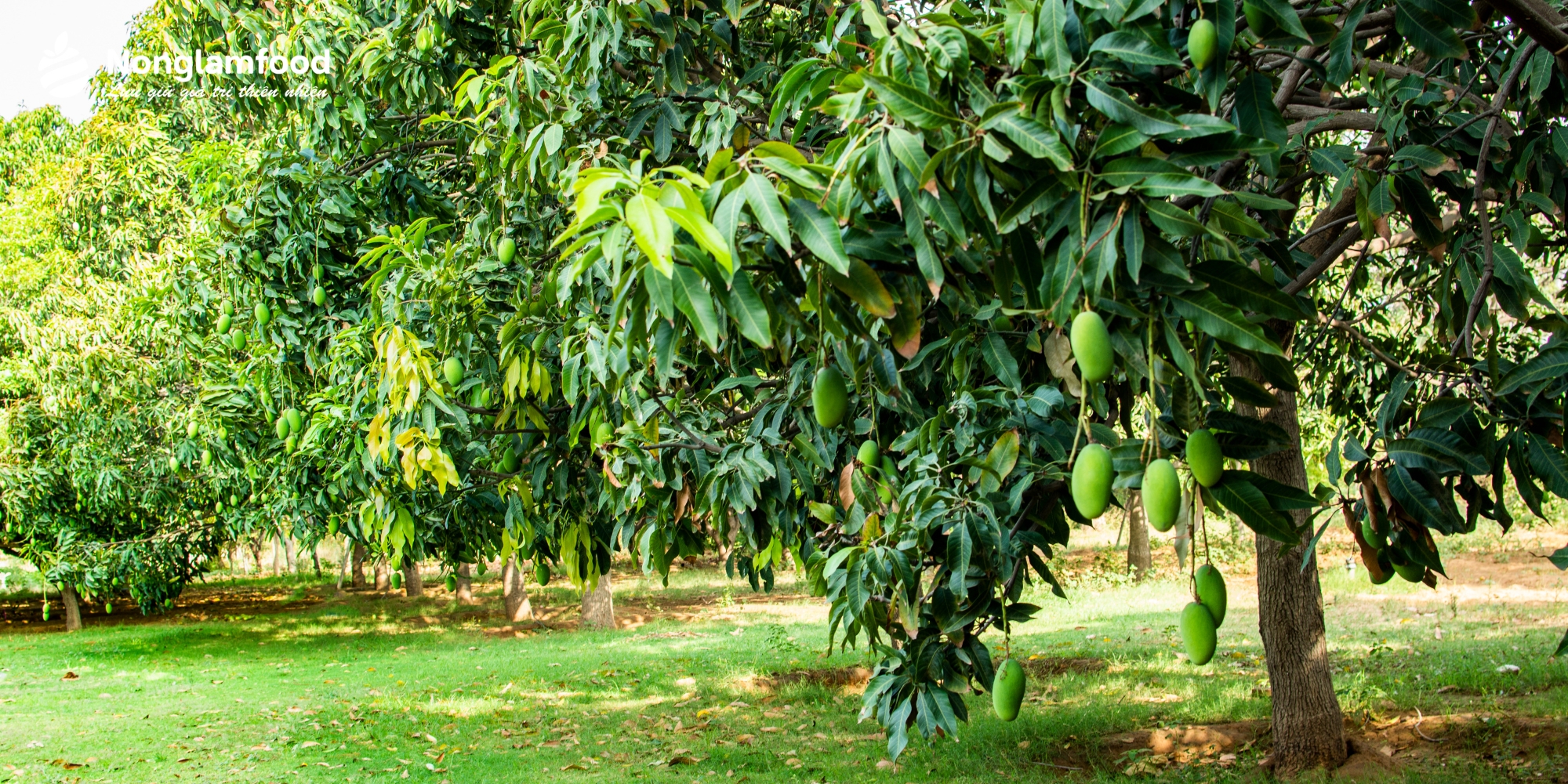
How are dried mangoes made? The process involves far more than slicing fresh mango and applying heat.[cite: 14] The variety selection, harvest maturity, sugar handling, slicing precision, and drying temperature each play a decisive role in determining whether the final product delivers vibrant colour, natural aroma, and balanced sweetness or ends up pale, overly sweet, and texturally disappointing.[cite: 14] Understanding this process is the key to evaluating dried mango quality as a buyer, a brand owner, or an informed consumer.[cite: 14]
Why Understanding How Dried Mangoes Are Made Matters for Quality
The global dried mango market is large, competitive, and highly variable in quality.[cite: 14] Products on the same retail shelf can range from carefully crafted, minimally processed dried slices that taste genuinely of fresh mango, to heavily sugared, heat damaged products that bear little resemblance to the fruit they came from.[cite: 14] The difference is almost entirely explained by the production process.[cite: 14]
For buyers and brand owners sourcing dried mango vietnam or from any producing country, the production method is the primary quality differentiator more predictive of outcome than country of origin alone.[cite: 14] Two processors using the same variety of Vietnamese mango can produce dramatically different finished products depending on their drying technology and sugar philosophy.[cite: 14]
Step 1: Choosing the Right Mango Variety Where Dried Mangoes Start
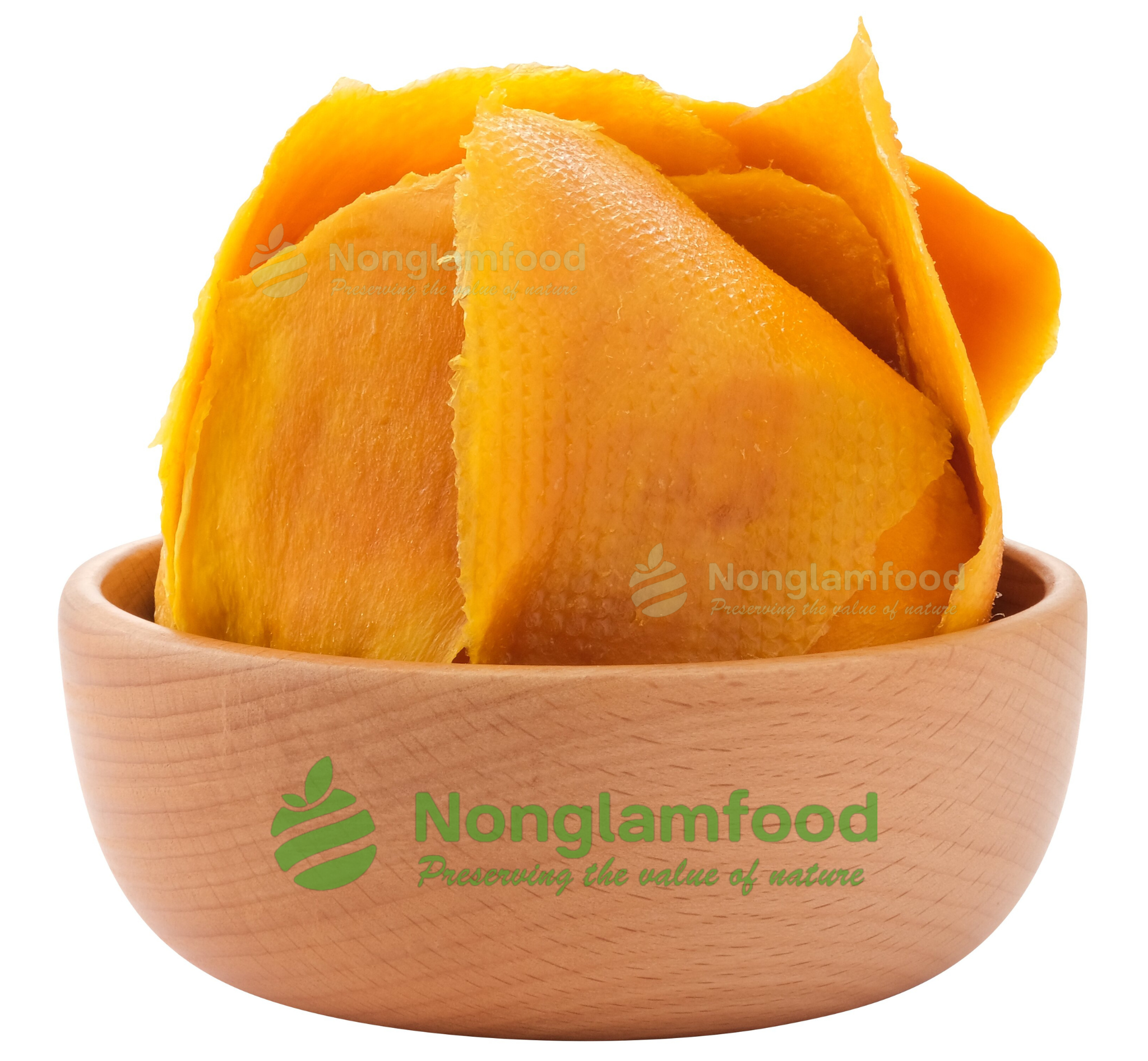
Not all mango varieties produce equally good dried mango.[cite: 14] The ideal variety for drying has a high natural Brix level (16-20 degrees Bx), firm flesh with good structural integrity, manageable fibre content, and a favourable sugar to acid ratio that produces a balanced sweet tart flavour when concentrated by drying.[cite: 14]
In Vietnam the most significant source of premium tropical dried mango the varieties most widely used for drying are:[cite: 14]
- Cat Chu: The preferred variety for heat pump dried mango slices.[cite: 14] Its balanced sugar to acid ratio produces excellent flavour concentration during drying, and its flesh structure holds well through the process without becoming fibrous or breaking down.[cite: 14]
- GL3 (Green Label 3): A Thai-cross variety widely grown in southern Vietnam.[cite: 14] GL3 produces large, visually impressive slices with strong colour important for products where appearance drives purchase.[cite: 14] Brix range of 16-20 degrees Bx delivers consistently good sweetness.[cite: 14]
- Cat Hoa Loc: Vietnam's premium fresh mango variety.[cite: 14] When dried, it produces exceptional flavour buttery, aromatic, virtually fibre-free.[cite: 14] Occasionally used for high-end limited dried formats.[cite: 14]
Harvest maturity is equally critical.[cite: 14] The optimal stage for drying is 80-90% ripe sweet enough to deliver good flavour concentration, but firm enough that flesh maintains structural integrity through processing.[cite: 14] Under-ripe mango produces sharp, acidic dried fruit with poor aroma.[cite: 14] Overripe mango breaks down during drying, producing mushy texture and fermented off-notes.[cite: 14]
Step 2: Post-Harvest Handling and Preparation
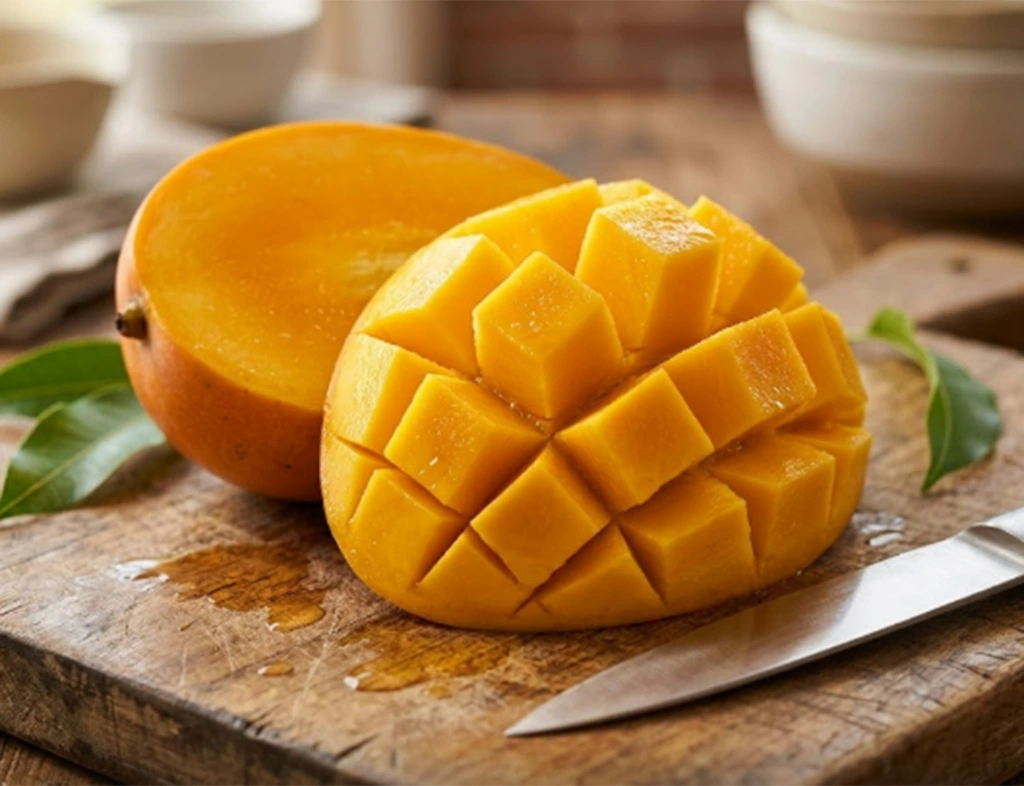
Once raw mango arrives at the facility, it undergoes Brix measurement, sorting, and grading for size and visual consistency.[cite: 14] Fruit failing to meet specification bruised, under-ripe, or overripe is rejected at this stage.[cite: 14] No drying technology can rescue poor raw material: the quality gate here is non-negotiable.[cite: 14]
Accepted fruit is washed in food-grade water and then peeled either manually for premium production or mechanically for larger volumes.[cite: 14] Slicing precision is the next critical variable.[cite: 14] Standard soft-dried mango slices are cut to 5-8mm thickness; 3-4mm produces a chewier result.[cite: 14] The key requirement is uniformity: pieces of varying thickness within the same batch will dry unevenly, creating a mixed-texture product that is difficult to control for quality or food safety.[cite: 14]
Step 3: Pre-Treatment and Limited Sugar Infusion
Before drying, mango slices are treated with ascorbic acid (Vitamin C) dipping to inhibit enzymatic browning the oxidation reaction that turns cut mango dark on air exposure.[cite: 14] This step preserves the natural amber-golden colour that is the most visible quality signal in premium dried mangoes made with care.[cite: 14]
A controlled sugar infusion follows.[cite: 14] Mango slices are immersed in a sugar solution for a defined period: osmosis draws water out of the fruit while sugar molecules partially diffuse in, pre-dehydrating the fruit and improving its finished texture.[cite: 14] The concentration and duration determine how much sugar the finished product contains.[cite: 14] Quality focused producers apply limited sugar: just enough for good texture and mouthfeel, without masking the mango's natural character.[cite: 14] The difference between a limited-sugar and a high sugar dried mango is immediately obvious in taste.[cite: 14]
Step 4: The Drying Process How Dried Mangoes Are Made Right or Wrong
The drying stage is where how dried mangoes are made separates into two fundamentally different outcomes depending on the technology applied.[cite: 14]
Stage 1. High-Temperature Drying (60-65 degrees C): Free Water Removal
In Stage 1, hot air at 60-65 degrees C removes free water rapidly from the surface and cellular spaces of the mango slices.[cite: 14] Evaporation is an endothermic process it absorbs heat so the product temperature stays well below the air temperature at this stage.[cite: 14] Heat damage is minimal.[cite: 14] This first stage is broadly similar to conventional hot-air drying.[cite: 14] The quality difference between technologies only becomes decisive in Stage 2.[cite: 14]
Stage 2. Heat Pump Drying (25–30 degrees C): Where Premium Dried Mango Is Made
Once free water has been removed, the remaining moisture is tightly bound within plant tissue within cell walls, protein structures, and sugar-water complexes.[cite: 14] This bound water evaporates much more slowly.[cite: 14] Without a temperature reduction at this stage, the product temperature would gradually rise toward the air temperature causing progressive and irreversible heat damage to colour pigments, Vitamin C, and volatile aromatic compounds.[cite: 14]
Heat pump technology solves this by enabling Stage 2 to operate at just 25-30 degrees C.[cite: 14] A refrigeration/condensing unit removes humidity from the drying air before it contacts the product, allowing effective drying at temperatures that protect heat-sensitive nutrients and natural colour.[cite: 14] The result: dried mango with deep amber-golden colour, fresh mango aroma in the bag, and soft-pliable texture not the pale, caramel-toned product of conventional high-temperature processing.[cite: 14]
Step 5: Tempering, Quality Control, and Packaging
After drying, the product undergoes a tempering period of 12-24 hours spread on trays to allow residual moisture to redistribute evenly across the batch.[cite: 14] Without this step, surface-dry pieces may conceal excess moisture in their centres, a food safety concern and a texture inconsistency.[cite: 14]
Quality checks cover moisture content, colour grading, texture assessment, and microbiological testing.[cite: 14] Products meeting specification are packaged in moisture-barrier pouches typically nitrogen-flushed or with modified atmosphere and labelled with full nutritional data, ingredient list, and best before information.[cite: 14] Shelf life for correctly processed and packaged heat pump dried mango is 12-18 months at room temperature.[cite: 14]
What Premium Dried Mangoes Look and Taste Like When Made Correctly
| Quality Indicator | Premium Heat Pump Dried | Standard Conventional Hot-Air |
|---|---|---|
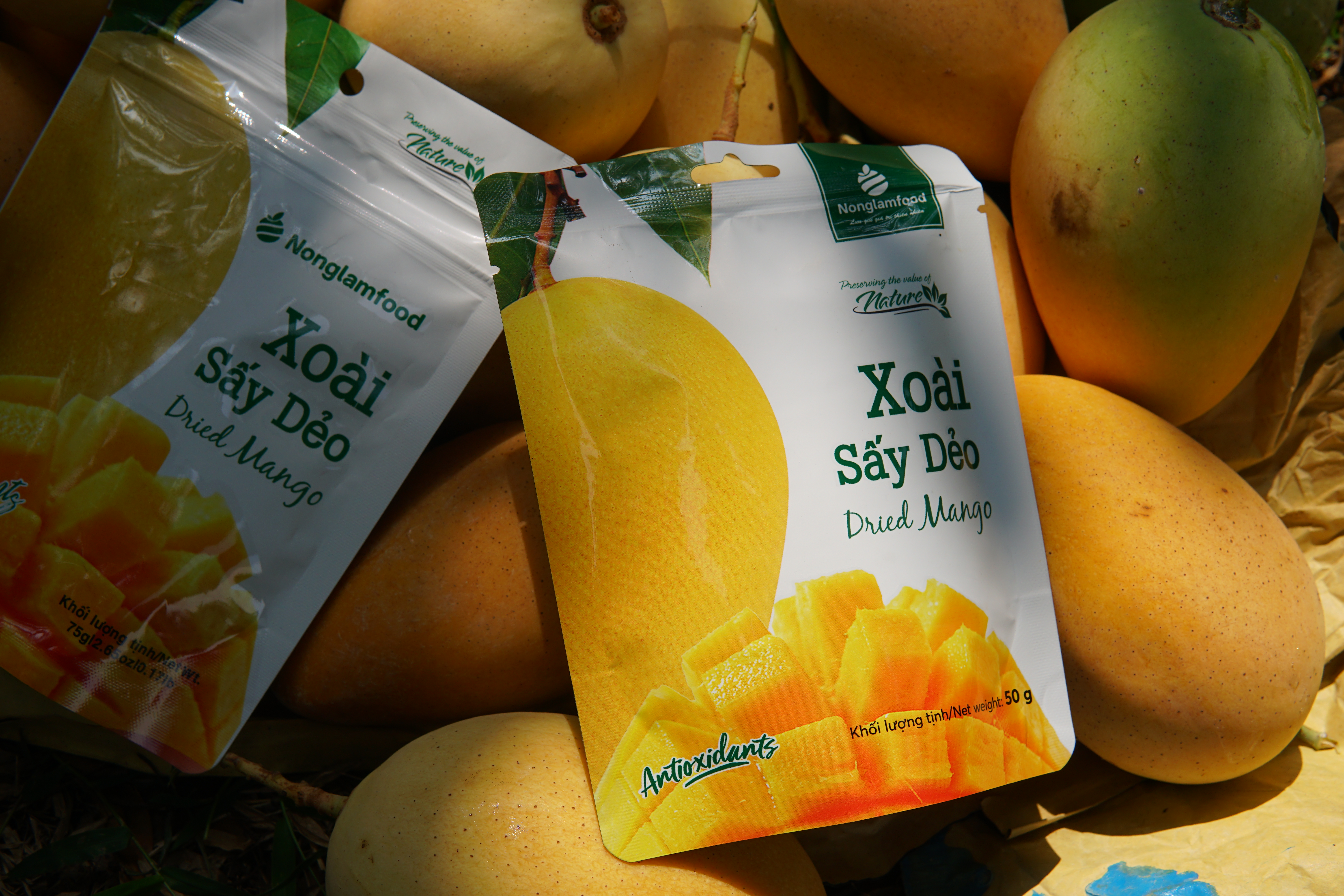
| Colour | Deep amber to golden-yellow natural carotenoid pigmentation intact[cite: 14] | Pale yellow to beige heat damage to pigments during Stage 2[cite: 14] |
| Texture | Soft, pliable, slightly tacky bends without snapping[cite: 14] | Variable: often brittle or excessively dense[cite: 14] |
| Aroma | Strong fresh mango aroma when the bag is opened[cite: 14] | Weak or absent volatile compounds lost in high-temperature drying[cite: 14] |
| Flavour | Concentrated mango character, balanced sweet-tart, clean finish[cite: 14] | Heavily sweet, caramel-forward, low fresh fruit character[cite: 14] |
| Ingredient list | Mango, limited sugar (less than 10g per 100g), ascorbic acid[cite: 14] | Often includes glucose syrup, sulphite, artificial colour or flavouring[cite: 14] |
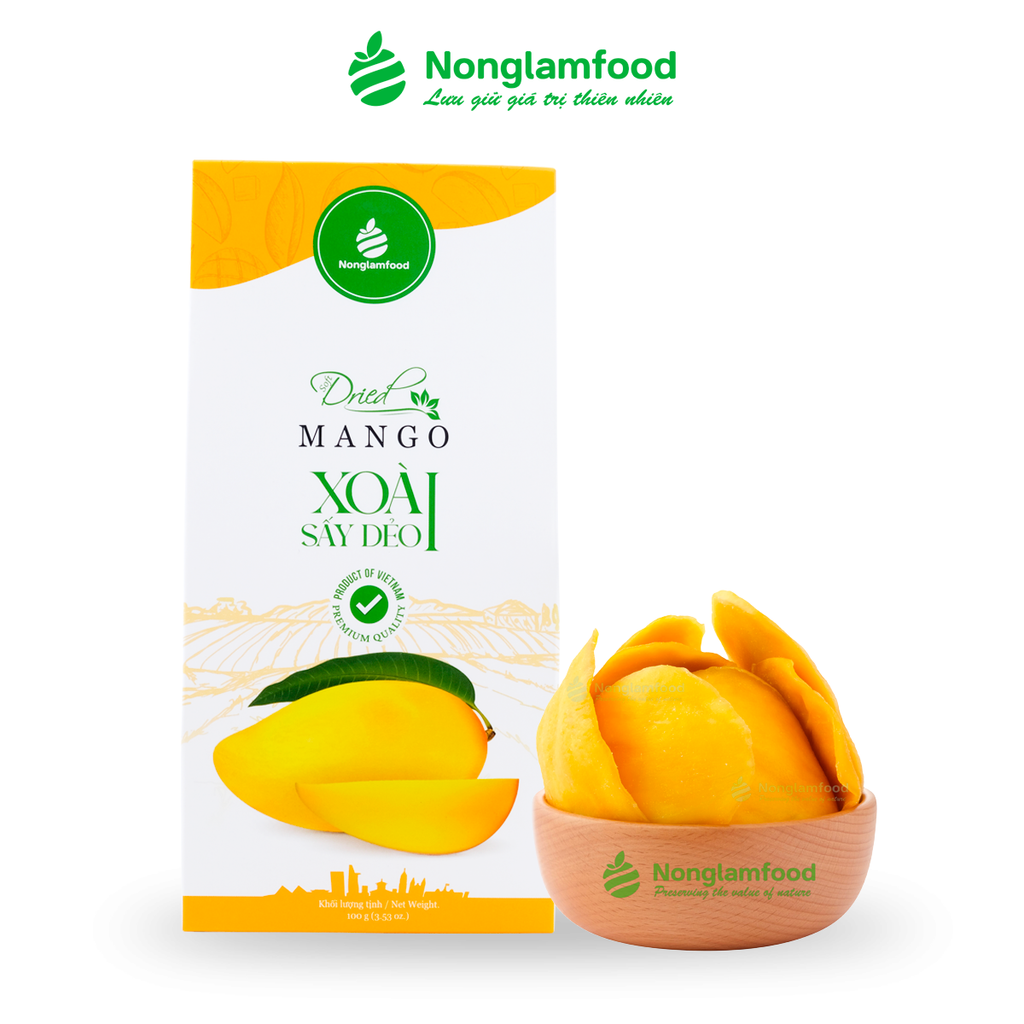
Nong Lam Food's dried mango range soft-dried mango slices, mango bars, lime-coated dried mango, and chocolate-dipped dried mango is produced using this two-stage heat pump process with limited sugar addition, consistently meeting the premium benchmark described above.[cite: 14]
Conclusion: How Dried Mangoes Are Made Is the Product You Receive
How are dried mangoes made at the quality level the market increasingly demands?[cite: 14] With rigorous variety selection, optimal harvest maturity, limited sugar philosophy, and above all a two-stage drying process that protects the fruit's natural characteristics through the critical bound-water removal phase.[cite: 14] These are not optional refinements: they are the factors that separate a premium product from one that merely occupies shelf space.[cite: 14]
For buyers evaluating dried mango suppliers, the production process is the right place to start the conversation before discussing price, before negotiating minimum order quantities, and before reviewing packaging.[cite: 14] A supplier who explains their drying temperatures, sugar levels, and quality control process in detail is a supplier who has thought seriously about what they are making.[cite: 14]
Request dried mango samples from Nong Lam Food including full product specifications covering moisture content, Brix, water activity, and nutritional analysis.[cite: 14] Visit vietnamdriedfruits.vn or contact our sourcing team directly.[cite: 14]
Related information
- How Do You Dry Limes for Flavored Coatings? A Technical Overview
- Assorted Dry Fruits: A Strategic Portfolio for Global Healthy Snack Retailers
- Popular Dried Fruits from Vietnam: What Global Buyers Are Ordering and Why
- Vietnam Durian Seasons Explained: When to Source the Best Quality
- How Do You Dehydrate Fruit Without a Dehydrator? DIY vs. Export Grade
- Dried Fruit Shelf Life Explained: How Long It Lasts and How to Store It Right
PRODUCT CATEGORIES
NEWS

Partner with us to provide and elevate healthier food options while supporting sustainable agriculture with a passion to serve and a commitment to innovation. Together, we can improve the lives of disadvantaged farmers and generate a positive impact!

