




Dedicated Manufacturer and Exporter of Premium Dried Fruits, Natural Fruit Bars, and Flavored & Coated Nuts
- Home
- /
- Knowledge Hub
- /
- Benefits to Eating Coconut: Nutrition Facts and What the Science Actually Says
Benefits to Eating Coconut: Nutrition Facts and What the Science Actually Says
The benefits to eating coconut have been both dramatically overstated and unfairly dismissed in popular nutrition media. The coconut is simultaneously the subject of superfood hype and saturated fat alarm and both framings miss the nuanced reality of what its nutritional profile actually delivers. This guide cuts through the noise to present what the science actually shows about coconut's unique composition, which aspects of coconut consumption genuinely support health, and how different coconut products deliver different nutritional propositions.
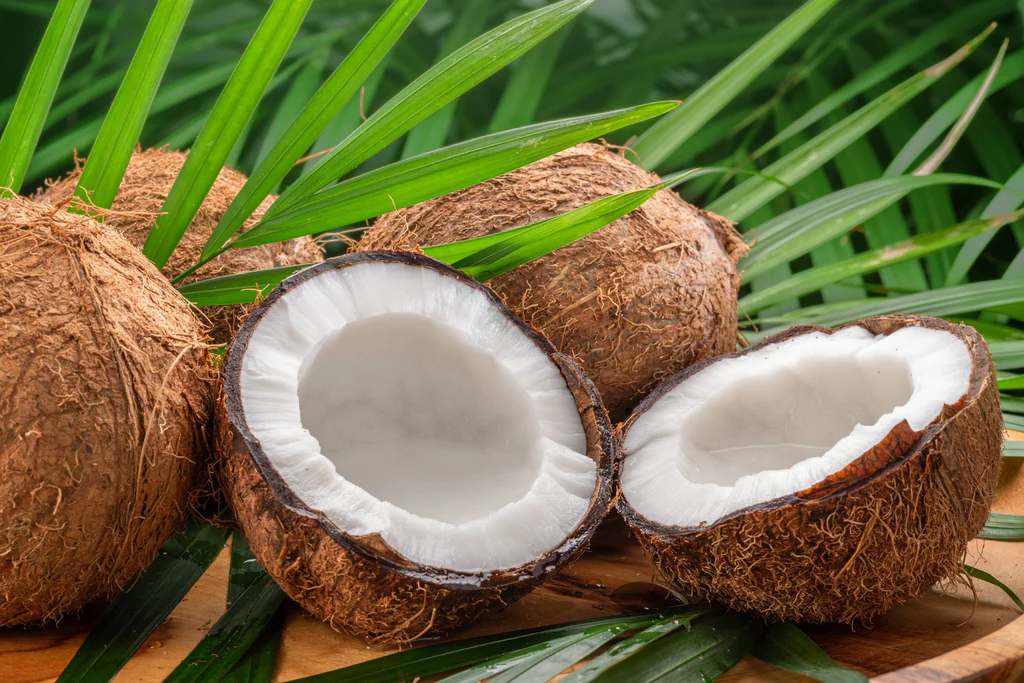
1. What Is in Coconut? A Complete Coconut Nutrition Facts Overview
Fresh mature coconut flesh the white, firm inner meat of a brown coconut is nutritionally distinctive primarily for its fat composition, fibre content, and mineral density.
| Nutrient | Per 100g Fresh Coconut Flesh | % Daily Requirement (approx.) |
|---|---|---|
| Energy | ~354 kcal | ~18% |
| Total fat | ~33g | ~42% primarily saturated |
| Saturated fat | ~29g | ~145% primarily MCTs |
| Dietary fibre | ~9g | ~30-36% |
| Protein | ~3.3g | ~6% |
| Manganese | ~1.5mg | ~75% outstanding source |
| Copper | ~0.4mg | ~44% meaningful contribution |
| Selenium | ~10µg | ~18% |
| Potassium | ~356mg | ~8% |
| Vitamin C | ~3.3mg | ~4% not a significant source |
The most important nutritional distinction is the nature of coconut's saturated fat. Approximately 60-65% of coconut's total fat content is medium-chain triglycerides (MCTs) lauric acid (C12), capric acid (C10), and caprylic acid (C8). These are structurally and metabolically different from the long-chain saturated fats that dominate animal products. MCTs are absorbed directly into the portal vein and metabolised by the liver, converting rapidly to ketone bodies for energy, rather than following the lymphatic absorption pathway of long-chain fats.
2. Key Benefits to Eating Coconut Supported by Research
a. MCT Fats and Metabolic Health: The Most Researched Benefit of Eating Coconut
MCTs are metabolised differently from long-chain saturated fats, and this metabolic distinction is the foundation of most research interest in coconut nutrition. Converted to ketones in the liver, MCTs provide rapid energy that does not require the same transport and storage processes as long-chain fats. Several studies have shown that MCT consumption, compared to equivalent long-chain fat intake, produces modest reductions in appetite and increases in energy expenditure though effects in whole-food coconut are less pronounced than in concentrated MCT oil.
Important context: while MCTs from coconut are metabolically more benign than long-chain saturated fats, coconut flesh also contains lauric acid which, unlike the shorter-chain MCTs, behaves partially as a long-chain fat in the body and does raise LDL cholesterol to some degree. The research base on whole-food coconut consumption and cardiovascular outcomes is less conclusive than the literature on isolated MCT oil.
b. Fibre and Digestive Health A Genuinely Strong Benefit of Eating Coconut
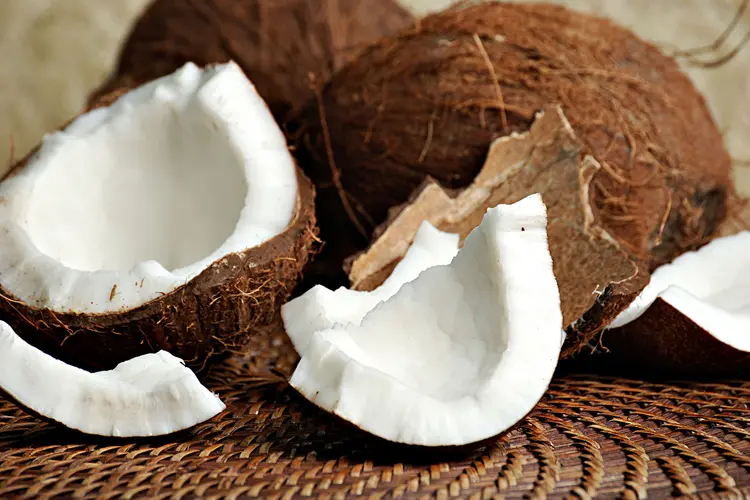
With 9g of dietary fibre per 100g, coconut flesh is one of the highest-fibre fruits available. This is a straightforwardly well-evidenced benefit: dietary fibre supports gut motility, feeds beneficial gut bacteria (prebiotic activity), moderates blood glucose response to meals, and contributes to satiety. Coconut fibre contains both soluble and insoluble components, supporting different aspects of gut function.
Coconut flour produced from defatted, dried coconut flesh is even more dramatically high-fibre at approximately 38g per 100g, making it one of the highest-fibre flours available for baking applications.
c. Manganese and Mineral Density: Underappreciated Coconut Nutrition Benefits
Coconut's manganese content approximately 75% of the daily requirement per 100g of fresh flesh is one of its most nutritionally significant and least-discussed characteristics. Manganese is an essential cofactor for several enzyme systems involved in bone formation, antioxidant defence (as a component of manganese superoxide dismutase), and carbohydrate metabolism. Copper (44% RDI) and selenium (~18% RDI) add further to coconut's mineral profile.
3. Coconut Nutrition Facts: How Form Affects Nutritional Value
- Fresh coconut flesh: Highest MCT fat content, excellent fibre, full mineral profile. The most complete nutritional format for those who want the full benefits to eating coconut.
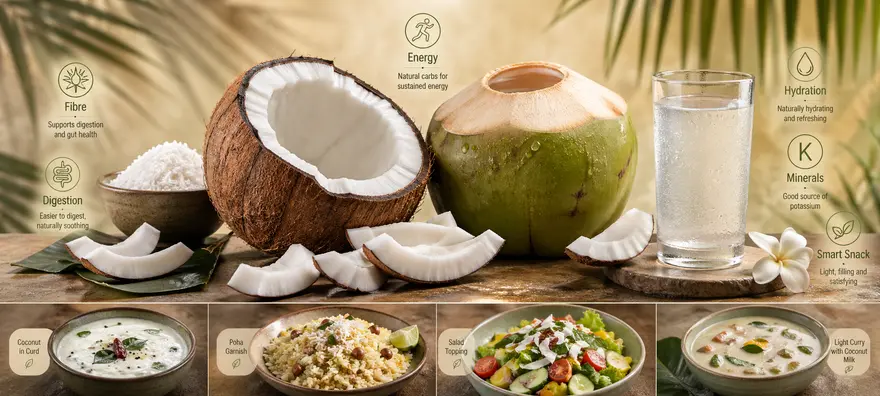
- Coconut water: Low calorie (approximately 19 kcal per 100ml), naturally rich in potassium (~600mg per cup) and electrolytes a genuinely useful post-exercise hydration drink. Very little fat, very little fibre compared to the flesh.
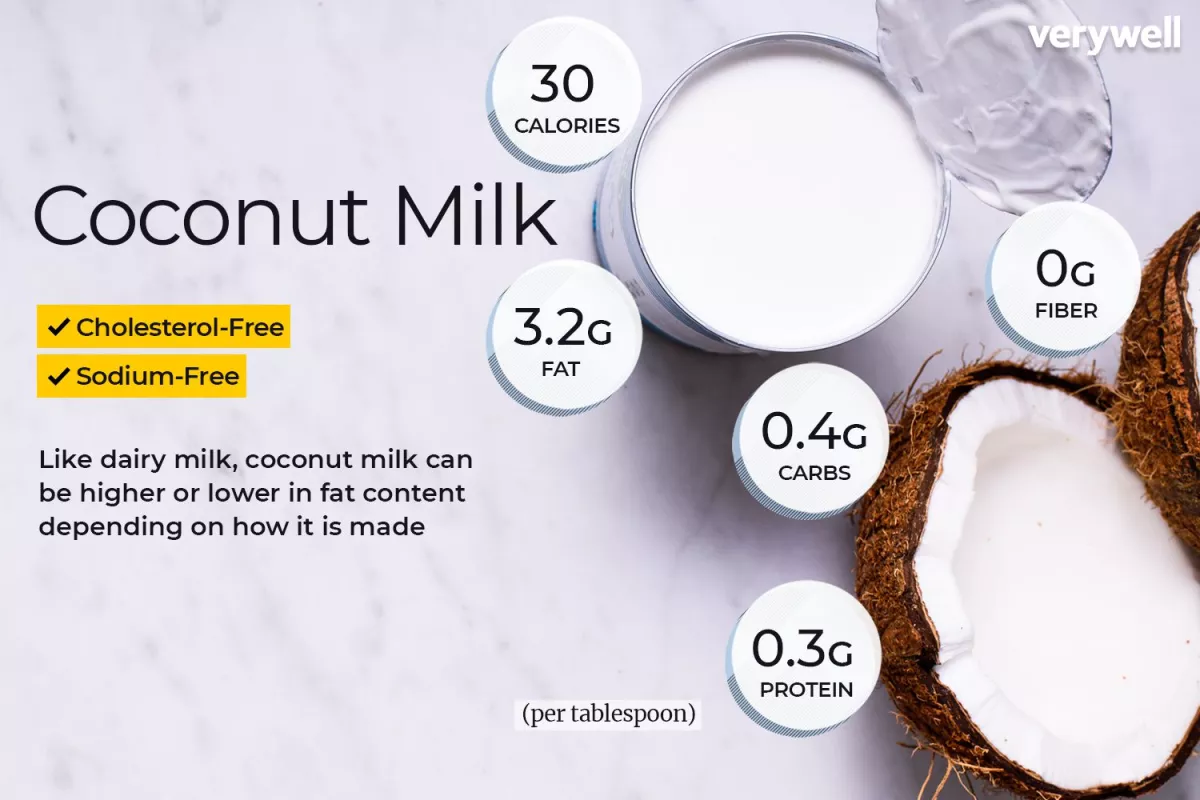
- Coconut milk (full-fat): Very high calorie density (~230 kcal per 100ml). Rich in MCTs but consumed as a cooking liquid rather than a hydrating drink. Not a health food in large quantities but a nutritious cooking fat when used moderately.
- Coconut oil: Concentrated MCT source but lacks the fibre, protein, and mineral content of whole coconut flesh. Better used as a cooking fat than as a health food taken by the spoonful.
- Coconut chips (lightly toasted): Retains much of the nutritional profile of fresh coconut flesh in a convenient, shelf-stable snack format. Nong Lam Food's Crispy Coconut Chips are made from thinly sliced mature coconut, lightly toasted to achieve a crispy texture and pleasant nutty sweetness, with no artificial additives. A practical everyday format for accessing the fibre, MCTs, and manganese that the benefits to eating coconut include.
4. Benefits to Eating Coconut Every Day: Practical Guidance
- Recommended daily portion: 20–30g of coconut chips or 30-40g of fresh coconut flesh is a sensible daily serving. Coconut is calorie-dense a 30g serving of coconut chips delivers approximately 190 kcal. Enjoying it as a portion-controlled daily snack captures its nutritional benefits without overconsumption.
- Best applications: Coconut chips as a mid-morning snack; coconut water post-exercise; coconut milk as a cooking liquid in curries and soups (not a daily beverage). Varying the form across the week provides different aspects of coconut's nutritional profile.
- Fat-soluble nutrient pairing: Coconut's MCT fat content improves the absorption of fat-soluble antioxidants (beta-carotene, lycopene, betacyanins) from other foods eaten in the same meal. Combining coconut chips with dried mango or dried dragon fruit in a trail mix is a nutritionally synergistic pairing.
- Who should be thoughtful: Those with elevated LDL cholesterol or established cardiovascular disease should discuss high-saturated-fat foods including coconut with a healthcare professional before making them a regular daily feature of their diet.
5. Conclusion
The genuine benefits to eating coconut are real and nutritionally significant: outstanding fibre content, a unique MCT fat profile with genuine metabolic interest, and exceptional manganese and copper density. The key is understanding which claims are well-evidenced and which are overstated, and incorporating coconut in appropriate portions as part of a varied, balanced diet rather than as a singular health solution.
Coconut in its most convenient everyday format lightly toasted chips with no artificial additives delivers the core nutritional value of the whole fruit in a portion-controlled, shelf-stable snack that requires no preparation.
Try Nong Lam Food's Crispy Coconut Chips thinly sliced, lightly toasted mature coconut with natural nutty sweetness and no artificial additives. Available at vietnamdriedfruits.vn.
Related information
- Exploring Different Types of Dry Fruits: A Portfolio for Retailers
- How to Make Dried Pineapple: Preserving Color, Texture & Natural Flavor
- How Do You Dehydrate Fruit Without a Dehydrator? DIY vs. Export Grade
- Brown Coconut Benefits: Green vs Brown Coconut Nutrition Explained
- Dried Mango Preservation: How to Store It Right and Keep It at Its Best
- Assorted Dry Fruits: A Strategic Portfolio for Global Healthy Snack Retailers
PRODUCT CATEGORIES
NEWS

Partner with us to provide and elevate healthier food options while supporting sustainable agriculture with a passion to serve and a commitment to innovation. Together, we can improve the lives of disadvantaged farmers and generate a positive impact!

