




Dedicated Manufacturer and Exporter of Premium Dried Fruits, Natural Fruit Bars, and Flavored & Coated Nuts
- Home
- /
- Knowledge Hub
- /
- Best Frozen Mango: What to Look for and Why Vietnam Dominates the Export Market
Best Frozen Mango: What to Look for and Why Vietnam Dominates the Export Market
The best frozen mango is not simply fresh mango that has been frozen it is a product defined by variety selection, harvest maturity timing, IQF processing precision, and cold chain consistency from orchard to destination. Understanding these variables is what separates a genuinely premium frozen mango product from a commodity that disappoints in the blender, the smoothie bowl, or the food service kitchen.
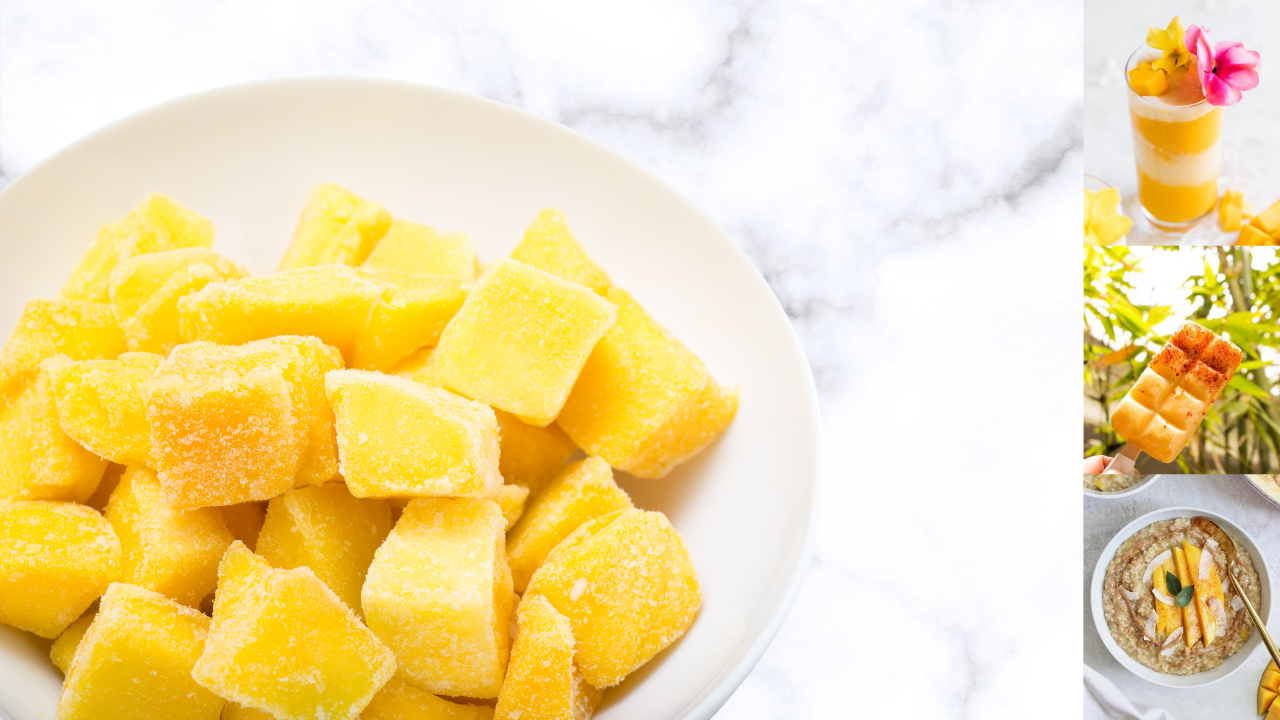
1. What Makes the Best Frozen Mango? Quality Indicators Explained
Frozen mango quality is determined before the fruit ever enters the freezer. The four variables that matter most are variety, maturity at harvest, IQF processing speed, and cold chain integrity in that order.
- Variety selection: Not all mango varieties freeze equally well. High-fibre varieties produce stringy, unpleasant texture when frozen and thawed. Low-fibre, high-Brix varieties retain their texture, colour, and flavour most effectively through the freeze-thaw cycle.
- Brix at harvest: The sugar content of the fresh mango at the point of freezing determines the sweetness intensity of the thawed product. For IQF mango destined for consumer use, target Brix of 14-18 degrees Bx depending on variety. Below 12 degrees Bx produces pale, flat-tasting frozen product.
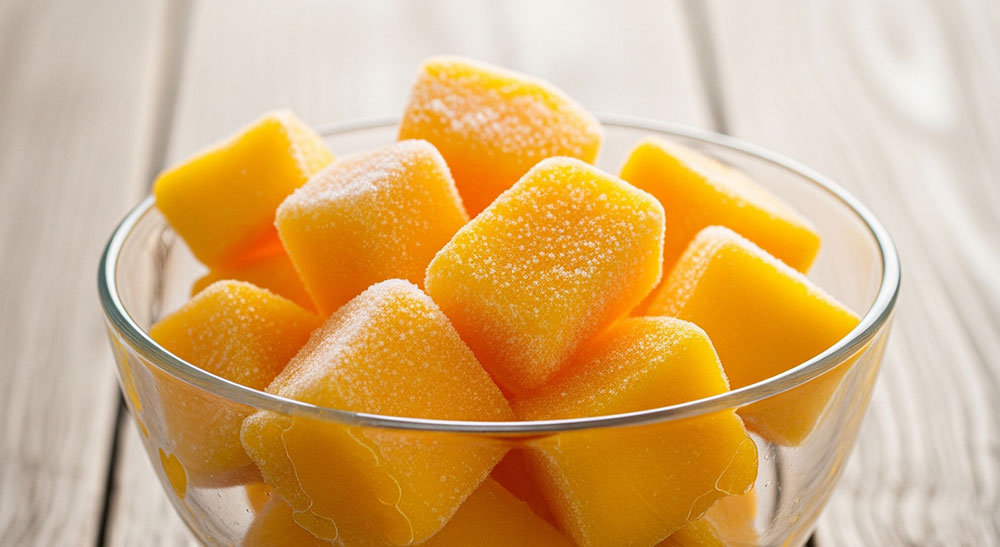
- IQF (Individually Quick Frozen) vs. block frozen: IQF is the quality benchmark. Individual pieces are frozen separately at -35°C or lower in a blast-freezing tunnel within 2-4 hours of peeling and cutting. This rapid freezing creates small ice crystals that minimise cell wall damage during thawing the mechanism that determines texture quality in the thawed product. Block-frozen mango is cheaper to produce but produces inferior texture on thawing.
- Cold chain integrity: The best IQF processing is destroyed by a single temperature abuse event during storage or transit. Frozen mango should never rise above -18°C from production to point of use. If pieces are clumped together in the bag rather than flowing freely, cold chain has been broken reject the batch.
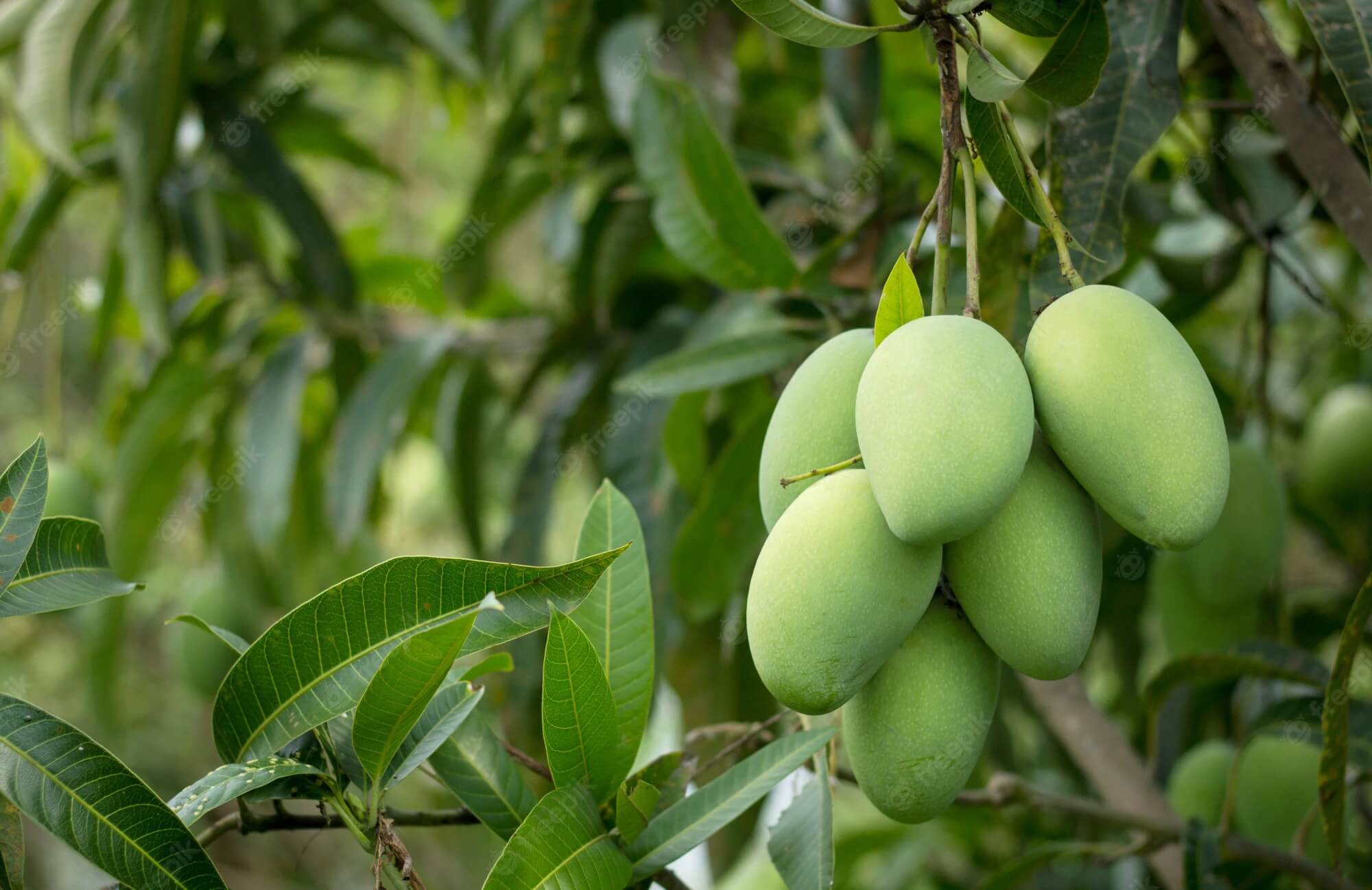
2. Best Frozen Mango Varieties: Which Types Freeze Best?
| Variety | Origin | Brix | Freeze Performance | Best Application |
|---|---|---|---|---|
| Alphonso | India | 18-22° | Excellent buttery, low fibre, exceptional aroma retention | Premium consumer retail, high-end food service |
| Ataulfo / Champagne | Mexico | 18-22° | Excellent creamy, no fibre, very clean flavour | Smoothies, culinary, premium retail |
| GL3 | Vietnam | 16-20° | Very good large pieces, strong colour retention | Export retail, food service, smoothies |
| Cát Chu | Vietnam | 16-18° | Good reliable, consistent Brix, good processing yield | Processing, food service, bulk supply |
| Carabao | Philippines | 14–18° | Good mild sweetness, popular for beverage manufacturing | Food service, blending, beverage base |
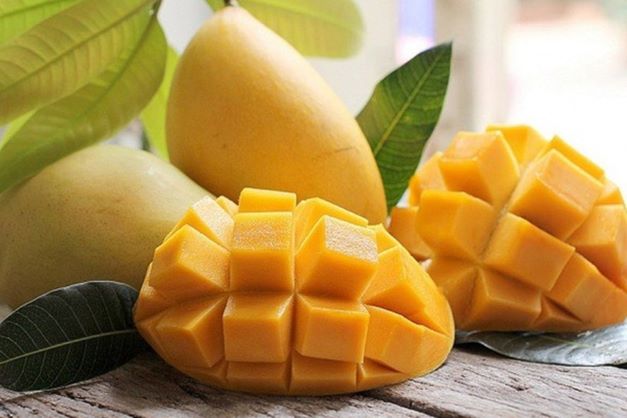
3. Frozen Mango vs. Fresh Mango: Nutritional and Practical Comparison
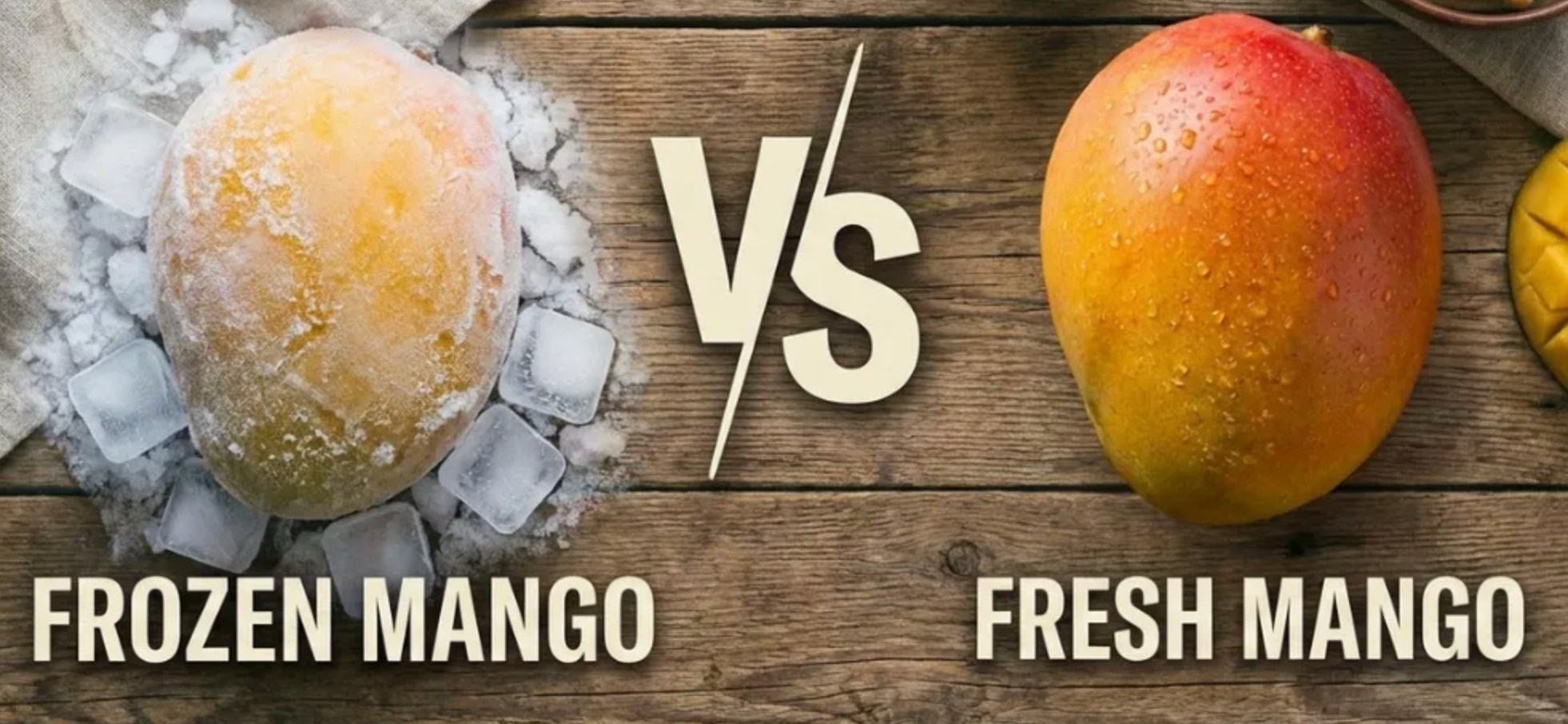
Frozen mango is nutritionally very close to fresh when processed correctly. The key comparison points that matter for consumers and buyers:
- Nutrient retention: IQF freezing at -35°C halts enzymatic activity and microbial growth essentially instantly. Vitamins and antioxidants are preserved at close to fresh-fruit levels typically 85-95% of fresh Vitamin C is retained in prompt IQF processing.
- Year-round availability: Fresh premium mango is a seasonal product in every origin market. Frozen mango delivers the same variety, the same Brix level, and the same consistent quality in any month of the year the primary practical advantage for food service and manufacturing buyers.
- Cost efficiency: Frozen mango typically costs 30-50% less per usable weight than premium fresh mango on a year-round basis, when waste from peeling, coring, and seasonal price spikes is factored in. For food service operations, the cost-in-use advantage is significant.
- Texture after thawing: This is where frozen mango's limitation is clearest for direct eating. Thawed IQF mango is softer than fresh due to ice crystal cell damage excellent for smoothies, smoothie bowls, sauces, and cooking, but not a substitute for fresh mango served in slices.
4. Vietnam as a Leading Frozen Mango Export Source
Vietnam has emerged as a significant and growing source of IQF frozen mango for the global market, driven by a combination of production scale, geographic advantage, and processing infrastructure investment.
- Production scale: The Mekong Delta produces sufficient mango volume particularly GL3 and Cát Chu varieties to support significant IQF export tonnage. Total annual mango production in Vietnam runs at 1.5-2 million tonnes, with the Mekong Delta accounting for the majority.
- Geographic advantage: Vietnam's road proximity to China the largest frozen mango consumer market in Asia gives Vietnamese IQF mango a cold chain advantage over Thai or Philippine competitors when supplying the Chinese food service and manufacturing market.
- Processing infrastructure: The Mekong Delta has seen substantial investment in IQF freezing capacity since 2018, driven by the broader expansion of Vietnamese fruit export ambitions. Modern blast-freezing tunnels capable of producing food safety compliant IQF product for EU and US markets are now operational at multiple facilities.
- Price competitiveness: Vietnamese IQF mango is consistently competitive against Thai and Philippine alternatives on landed cost for most import markets a function of lower raw material input costs during peak season and efficient processing infrastructure.
- Certification progress: Increasing numbers of Vietnamese frozen fruit processors now hold BRC, FDA, and GlobalGAP certifications enabling access to the most demanding EU, US, and Australian retail and food service channels.
5. How to Evaluate Frozen Mango Quality: A Buyer's Checklist
- Request product specification sheet: Variety, Brix at freezing, piece size specification, IQF certification, microbiological limits, and best-before dating based on storage conditions.
- IQF verification test: Shake the sealed bag. Individual pieces should flow and separate freely. A solid block or heavily clumped product indicates that cold chain was broken during storage or transit reject.
- Thaw test: Thaw a small sample at room temperature. Assess colour (deep golden-yellow indicates good maturity; pale or greyish indicates sub-standard harvest), aroma (strong clean mango fragrance; any fermented note is a rejection signal), and texture (soft but intact, not watery or disintegrating).
- Microbiological certificate: Request batch-specific microbiological testing results. Essential for food service and retail applications. Standard benchmarks: Total Plate Count <100,000 CFU/g, E. coli absent, Salmonella absent.
6. Conclusion
The best frozen mango combines the right variety selection, IQF processing precision, and unbroken cold chain from farm to destination. Vietnam delivers on all three dimensions for buyers seeking a cost-competitive, reliably quality tropical IQF mango source particularly for the Chinese, Korean, Australian, and emerging European market segments where Vietnamese origin is gaining recognition.
For buyers whose product range includes year-round tropical fruit in multiple formats, frozen and dried mango serve complementary roles: frozen for food service, cooking, and smoothie applications where texture after thawing is acceptable; dried for retail snacking, gifting, and on the go occasions where ambient shelf life and convenience are paramount.
Nong Lam Food specialises in premium heat pump dried mango the complementary year-round format to frozen in any tropical fruit product strategy. Explore the dried mango range at vietnamdriedfruits.vn or contact our team to discuss sourcing options.
Related information
- How Do They Freeze Dry Fruit and How Does It Compare to Heat Pump Drying?
- Dry Fruit Smoothie Recipes and Why Quality Dried Fruit Makes All the Difference
- Dried Mango Preservation: How to Store It Right and Keep It at Its Best
- How Are Dried Mangoes Made? Ensuring Texture and Flavor Retention
- Choosing a Reliable Dry Fruit Company for OEM and Bulk Supply
- Brown Coconut Benefits: Green vs Brown Coconut Nutrition Explained
PRODUCT CATEGORIES
NEWS

Partner with us to provide and elevate healthier food options while supporting sustainable agriculture with a passion to serve and a commitment to innovation. Together, we can improve the lives of disadvantaged farmers and generate a positive impact!

