


Dedicated Manufacturer and Exporter of Premium Dried Fruits, Natural Fruit Bars, and Flavored & Coated Nuts
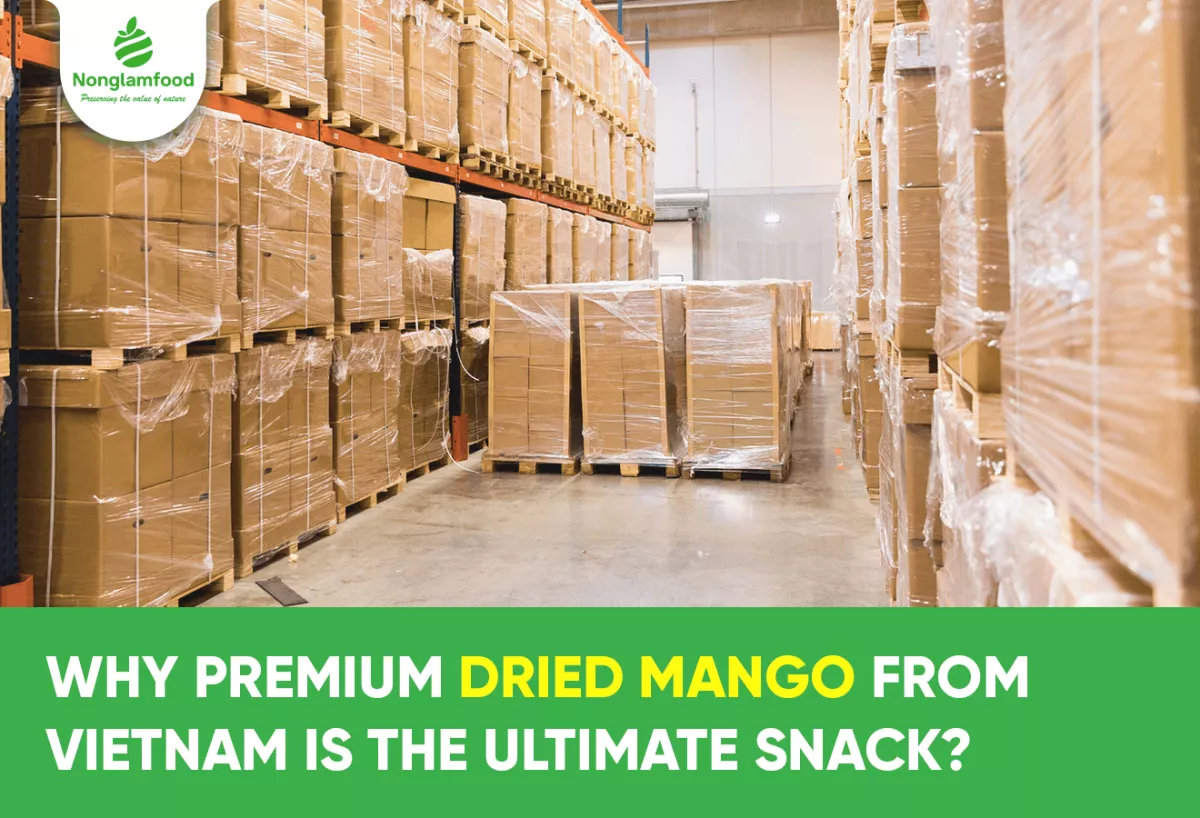
Why Premium Dried Mango from Vietnam is the Ultimate Snack?
Ask anyone who has tried genuinely premium dried mango from Vietnam alongside a standard supermarket alternative and they typically describe the same reaction: the colour is deeper, the aroma more intense when the packet opens, and the flavour more convincingly tropical. This guide explains what produces those differences and how the category built on that quality foundation is now extending well beyond plain dried slices into formats that reposition Vietnamese dried mango in the premium gifting and indulgence tier.
1. The Raw Material Advantage: Vietnam's Mango Diversity
The starting point for premium dried mango from Vietnam is the raw material. Vietnam's Mekong Delta produces mango varieties with naturally high Brix levels of 16 - 20 degrees Bx at peak ripeness among the highest in tropical mango production globally. What makes Vietnamese mango particularly valuable for drying is not just the sweetness level, but the range of characteristics across different varieties, each suited to different processing applications and end products.
- Cát Chu delivers a balanced sugar-to-acid ratio with excellent processing yield the variety most widely used in premium soft dried mango production for its consistent quality and good Brix throughout the harvest season.
- GL3 produces large, visually impressive slices with strong natural colour retention well-suited to premium retail formats where the appearance of the finished piece matters alongside flavour.
- Cát Hòa Lộc is considered the most prized Vietnamese mango variety domestically, with extraordinary natural aroma and virtually fibre-free flesh characteristics that translate directly into a cleaner, more refined eating experience in the dried format.
- Keo a variety of Cambodian origin now widely cultivated across the Mekong Delta brings a distinctly different character to the mix. Its defining qualities are thick flesh, notably low fibre content, and a crisp bite that sets it apart from most other Vietnamese mango varieties. The flavour profile changes markedly with ripeness: when green, Keo mango is crisp, lightly sour, and mildly astringent making it a popular fresh-eating choice in Vietnamese cuisine, typically as a dipping snack with salt and chilli. At full ripeness, the flesh softens to a pliable texture and the flavour shifts to a rich, concentrated sweetness. For dried mango production, the ripe stage's low fibre content and good sugar concentration make it a particularly appealing processing candidate especially where a firmer, less stringy bite is a desirable texture characteristic in the finished product.
The main harvest season runs March to June across the Mekong Delta, with a secondary off-season crop available October to January through managed flowering techniques. This extended annual sourcing window enables year-round production of consistently ripe raw material a structural advantage over single-harvest origins.
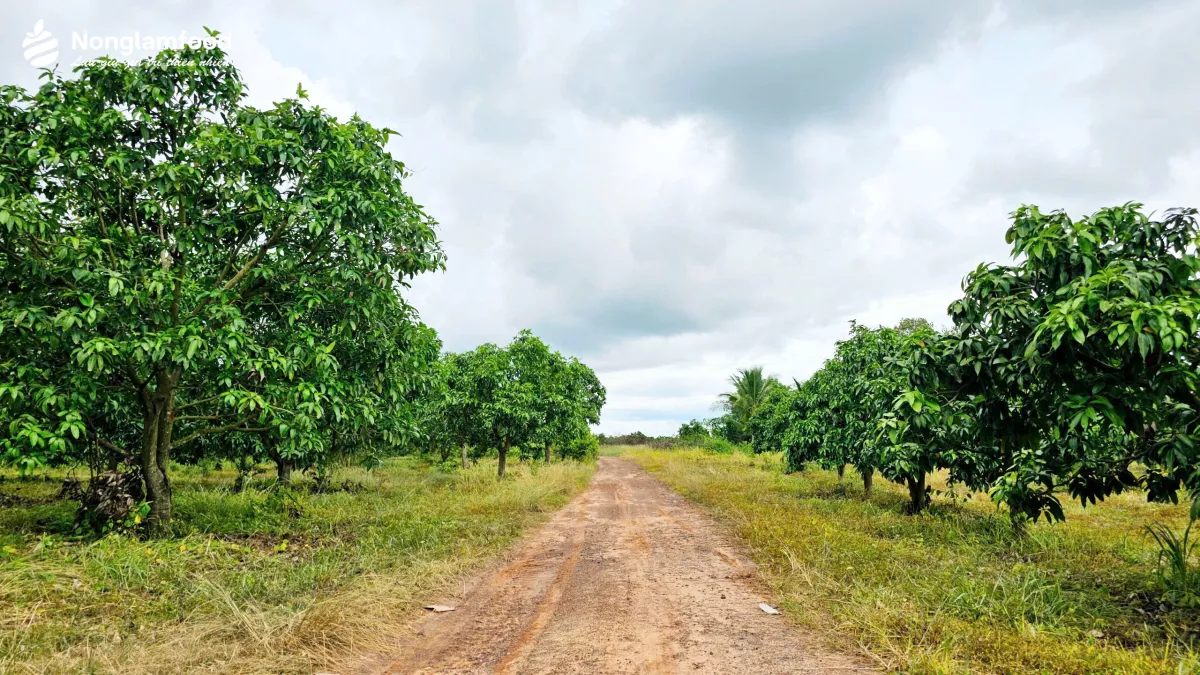
Vietnam's tropical climate, rich soils, and expert cultivation produce the naturally sweet mango at the heart of every Nonglamfood Soft Dried Mango pack
2. Why Heat Pump Drying Changes the Result
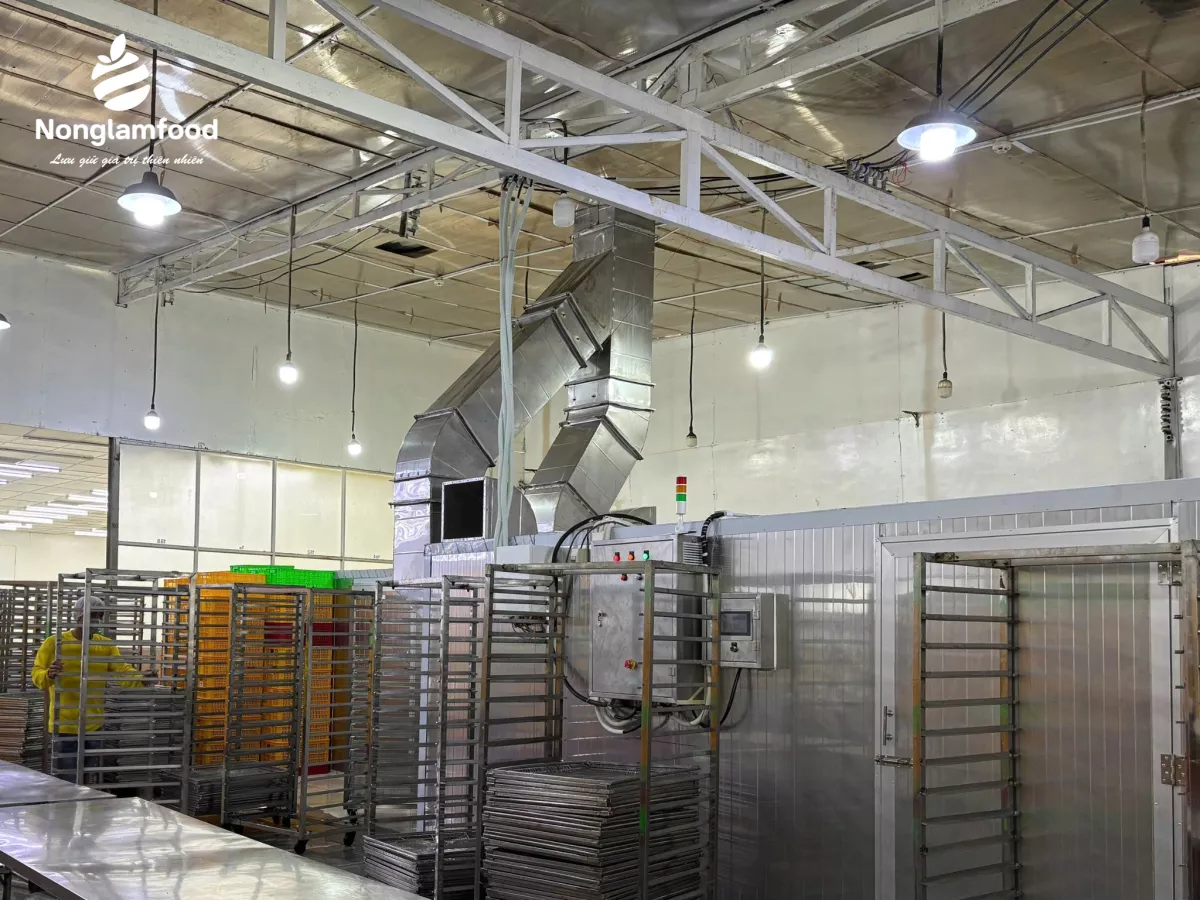
Nonglamfood's food science team: “In Stage 1, we use drying air at 60 - 65°C to remove free water rapidly. Because free water evaporation is endothermic, the product temperature stays well below air temperature, limiting heat damage. In Stage 2, we drop to 25 - 30°C using a refrigeration condensing unit that removes humidity from the air without adding heat. This is where the quality difference is made Vitamin C, polyphenols, natural colour pigments, and volatile aromatic compounds are all protected from the thermal damage that conventional drying causes at this critical phase.”
The outcomes are directly visible and smellable: deep amber-golden colour, strong natural mango aroma on opening, and concentrated tropical flavour that requires minimal added sugar. These are the measurable results of a production decision made with specific food science intent.
Nonglamfood Soft Dried Mango: a product shaped by Vietnamese agricultural heritage and developed with the food science expertise of two world-class universities.
3. The Limited Sugar Philosophy
Premium Vietnamese dried mango uses limited sugar addition controlled amounts to achieve good texture, not to compensate for flavour lost to aggressive processing. When the mango's own Brix (16–20°Bx at harvest) is preserved through careful drying, the natural sweetness is sufficient. Added sugar becomes a textural tool rather than a flavour crutch and the difference is immediately apparent to anyone who has tasted both approaches side by side.
4. Vietnam's Position in the Global Dried Mango Market
Vietnamese dried mango is now available in retail and food service channels across Europe, the USA, South Korea, Australia, Malaysia, and the Philippines. In Korean premium health food retail and European specialty channels, Vietnamese origin has become associated with a quality tier above commodity alternatives. Domestically, premium dried mango is sold through major supermarket chains, tourism retail in Hoi An, Ho Chi Minh City, and Da Lat, Lunar New Year gifting channels, and e-commerce platforms.
5. The Category Is Expanding: From Everyday Snack to Premium Gifting Tier
Vietnamese dried mango built its international reputation on the quality of the plain dried fruit. That quality is now the foundation for formats that extend the category into premium gifting and indulgence territory combining the mango with other distinctly Vietnamese and Southeast Asian ingredients to create products that carry a clearer regional identity.
Nonglamfood's recently launched chocolate-dipped dried mango range illustrates this evolution. Each of the four variants pairs the same heat pump dried mango base with ingredients chosen for flavour compatibility and regional provenance:
- Dark Chocolate Dipped Mango with Almonds: pure dark chocolate using natural cacao mass and cacao butter - a pairing that lets the mango's natural tartness provide contrast to the chocolate's depth. The most direct expression of the combination.
- Dark Chocolate Dipped Mango with Nuts & Red Roselle: dark chocolate with pumpkin seeds, almonds, and soft-dried red roselle flower. The roselle sourced from Vietnam's central highlands adds a subtle floral tartness that makes this the most distinctly Vietnamese variant in the range, introducing an ingredient with real regional identity.
- White Chocolate Dipped Mango with Crunchy Coconut: white chocolate and crispy toasted coconut. Coconut is perhaps the most natural companion to mango in Southeast Asian cuisine; in dried form, it adds aromatic crunch that amplifies rather than competes with the mango's tropical character.
- White Chocolate Dipped Mango with Nuts & Red Roselle: white chocolate with pumpkin seeds and soft-dried red roselle. The visual pairing of white chocolate, green seeds, and deep red roselle creates a product that looks distinctively Vietnamese and premium a natural choice for gifting contexts.
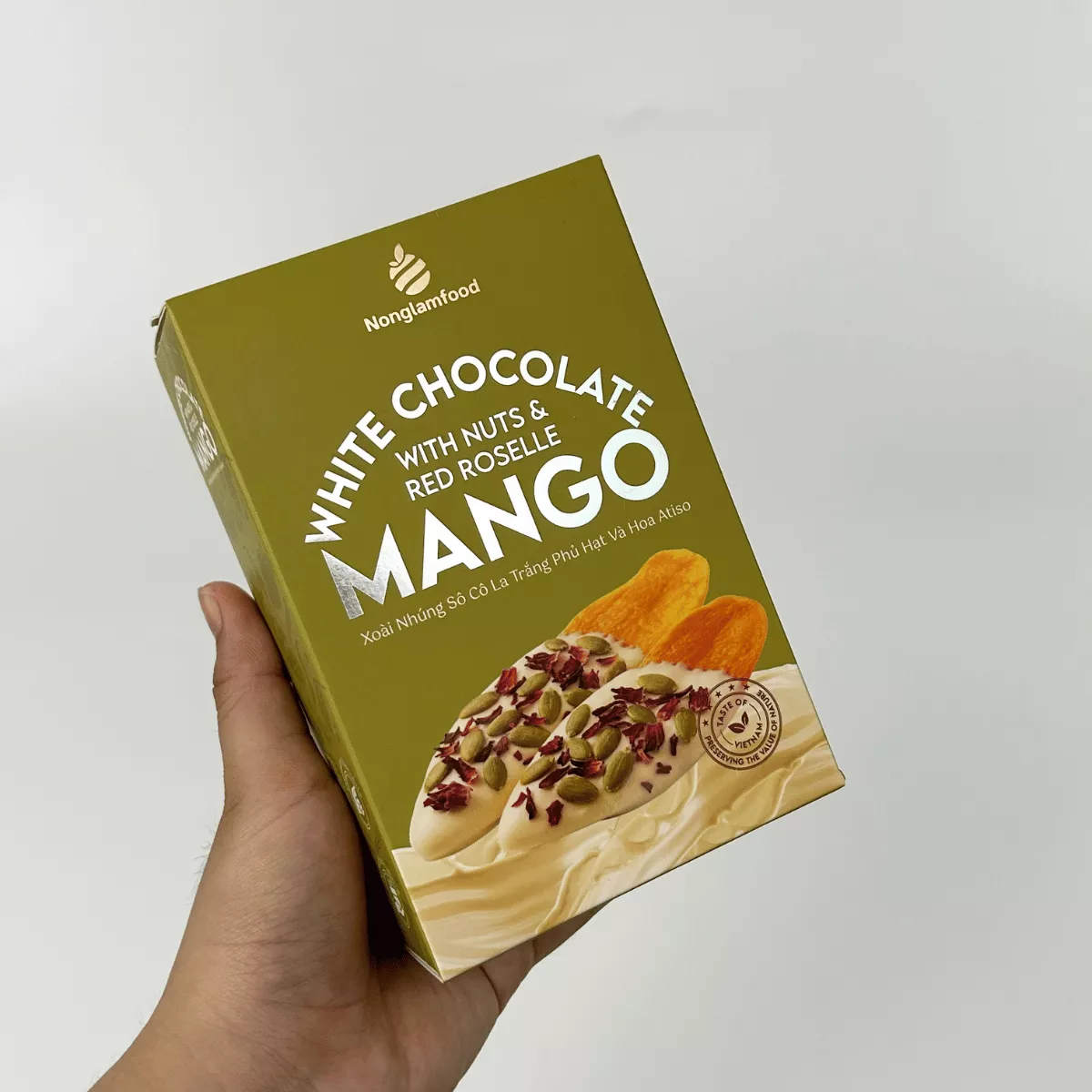
The contrast of white chocolate, green seeds, and deep red roselle makes this the natural gifting choice in the collection
6. What to Look for When Buying Dried Mango from Vietnam
- Deep amber-golden colour: The most accessible indicator of heat pump drying and preserved carotenoids. Pale or artificially bright yellow suggests conventional processing or colour treatment.
- Limited or no added sugar: Mango should be the first ingredient. Glucose syrup in second position signals compensatory sweetening.
- Variety labelling: Premium producers specify the mango variety Cát Chu, GL3, Cát Hòa Lộc, or Keo. Generic “mango” labelling without variety information typically indicates commodity-grade raw material.
- Certifications: IFS, BRCGS, HACCP, ISO 22000 minimum; BRC for EU/UK; FDA registration for US market access.
- Product range depth: A producer capable of developing chocolate-dipped formats with regional Vietnamese ingredients is demonstrably a manufacturer rather than a trading agent, with food science capability behind the product development.
7. Conclusion
Premium dried mango from Vietnam earns its reputation through exceptional Mekong Delta raw material including varieties as distinct as Cát Hòa Lộc's aromatic refinement and Xoài Keo's low-fibre crispness combined with heat pump two-stage drying that protects colour and nutrients, and a limited sugar philosophy that lets the mango's own natural Brix provide the sweetness compensatory additives normally supply. The category is now expanding further incorporating distinctly Vietnamese ingredients like red roselle alongside dark and white chocolate to create formats that carry a clear regional identity and position Vietnamese dried mango where the quality has always suggested it belongs: in the premium gifting tier.
Related information
- Does Dried Mango Have Vitamin C? Immunity Boosting Facts
- Nonglamfood x VIETBABY HCM 2022
- How to Make Dried Mango at Home: Easy DIY Methods
- Is Dried Mango Good for Weight Loss? Dietitian Answers
- Natural and healthier dried mango manufactured by low temperature drying
- Pineapple Cultivation in Vietnam – When and How Farmers Harvest Their Pineapples
PRODUCT CATEGORIES
NEWS

Partner with us to provide and elevate healthier food options while supporting sustainable agriculture with a passion to serve and a commitment to innovation. Together, we can improve the lives of disadvantaged farmers and generate a positive impact!

