




Dedicated Manufacturer and Exporter of Premium Dried Fruits, Natural Fruit Bars, and Flavored & Coated Nuts
How to Tell if Dried Mango is Bad Before Eating?
Most people throw away perfectly good dried mango and occasionally keep genuinely spoiled product without realising it. The reason for both mistakes is the same: relying on colour as the primary indicator, when colour is actually one of the least reliable signals of all. Knowing how to tell if dried mango is bad requires understanding which indicators are real and which are just normal quality evolution.
1. The Most Reliable Spoilage Indicators: In Order of Reliability
a. Smell: The Most Trustworthy Test
Open the container and smell immediately before anything else. Fresh, properly stored dried mango should smell strongly of concentrated tropical mango sweet, aromatic, distinctly fruity. This aroma should be present and recognisable even in dried mango stored for many months. If the smell is:
- Fermented, sour, or alcohol-like: Indicates microbial activity (yeast fermentation) water activity has risen above the level at which microbial growth is prevented. Discard immediately.
- Musty or mouldy: Similar to damp cloth or old bread. Indicates mould activity even if not yet visible. Discard immediately.
- Rancid or oily: Indicates oxidative rancidity of natural fats more common in coconut-containing products but possible in dried mango formulations.
- Absent no detectable aroma: Not a spoilage indicator but a quality-loss indicator. Safe to eat, but significantly lower quality from volatile compound depletion.
b. Visible Mould: The Unambiguous Discard Signal
Any fuzzy growth on the surface of dried mango pieces in any colour including white, grey, green, or black is the unambiguous sign that the entire batch must be discarded. Mould produces mycotoxins that spread beyond visibly affected areas. Discard everything and clean the storage container thoroughly. To distinguish mould from sugar crystals: mould has a fuzzy, three-dimensional texture growing outward from the surface; sugar crystals are flat, granular, and powdery, lying on the surface. When in doubt, touch gently: sugar crystals feel like fine powder; mould feels like a dry fuzz.
c. Texture: A Supporting Indicator
Properly stored dried mango should remain pliable with a slight natural tackiness. Two texture changes indicate potential problems: extreme stickiness combined with off-odour (moisture reabsorption and possible microbial activity check the smell); and complete rigidity or brittleness (not a safety concern, but indicates further drying and significant quality decline).
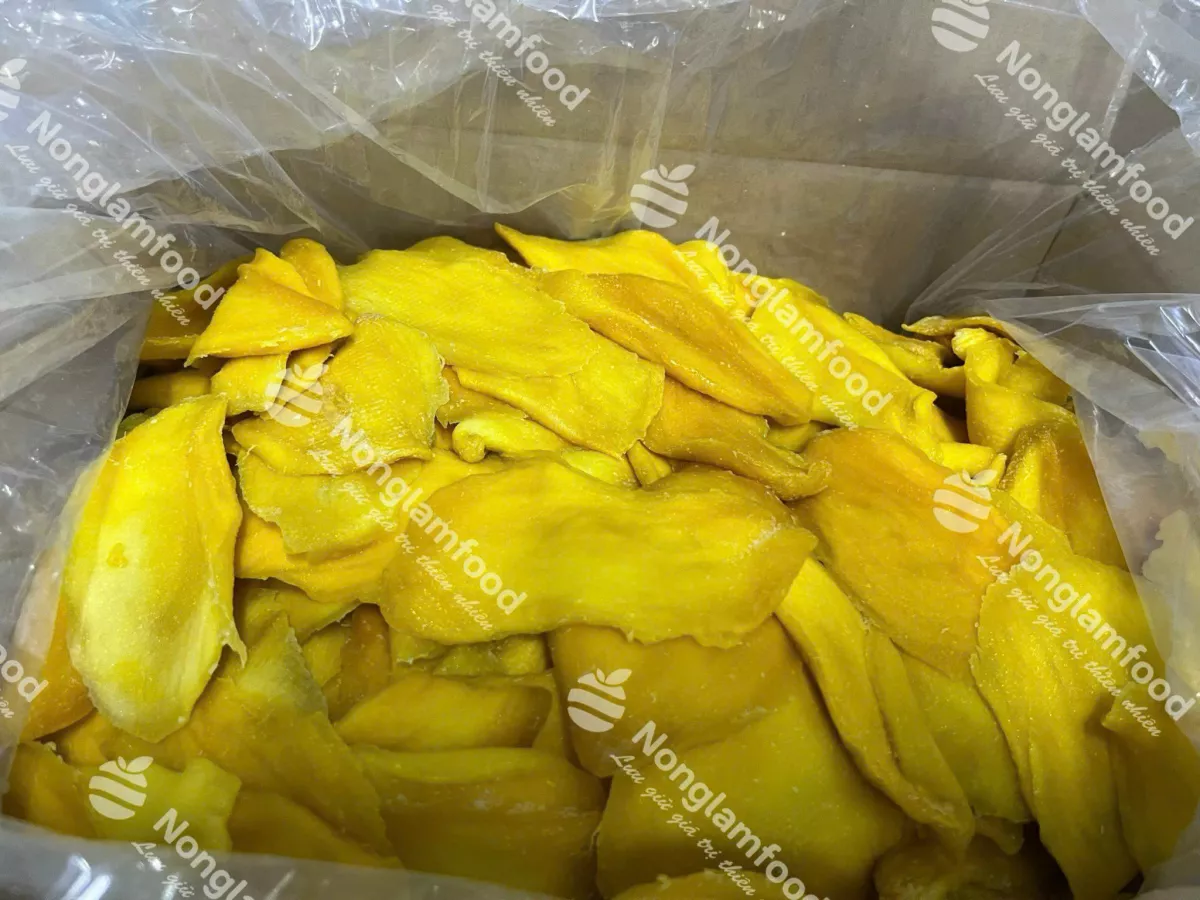
Nonglamfood Soft Dried Mango is sealed at production with moisture-barrier packaging to protect quality from the day it leaves the facility to the day you open it
2. What Does NOT Mean Dried Mango Is Bad
a. Colour Darkening: Normal and Safe
This is the most common reason people discard perfectly safe dried mango. Colour change from amber-golden to darker amber or light brown is caused by the Maillard reaction (natural sugar-amino acid browning continuing slowly throughout shelf life) and gradual oxidative carotenoid degradation. Neither process is microbial. Neither makes the product unsafe. If colour-darkened dried mango smells normal and shows no visible mould, it is safe to eat. Discard based on smell and mould not on colour alone.
b. White Crystals: Sugar, Not Mould
White crystalline deposits on the surface are one of the most common causes of unnecessary discard. These are sucrose or fructose crystals natural sugars that have slowly crystallised out of the concentrated fruit a completely normal physical process with no food safety implications. Entirely safe to eat, they dissolve immediately on the tongue. Distinguished from mould by their granular, flat, powdery texture versus mould's fuzzy, three-dimensional growth pattern.
c. Past the Best-Before Date: Not Automatically Bad
Dried mango carries a best-before date (quality indicator) rather than a use-by date (safety indicator). Properly stored dried mango in an intact original seal can often be consumed after its best-before date colour will have darkened, aroma may have weakened, texture may have changed, but the product is not necessarily unsafe. The smell test remains the most reliable indicator: if it smells like concentrated mango, it is most likely safe.
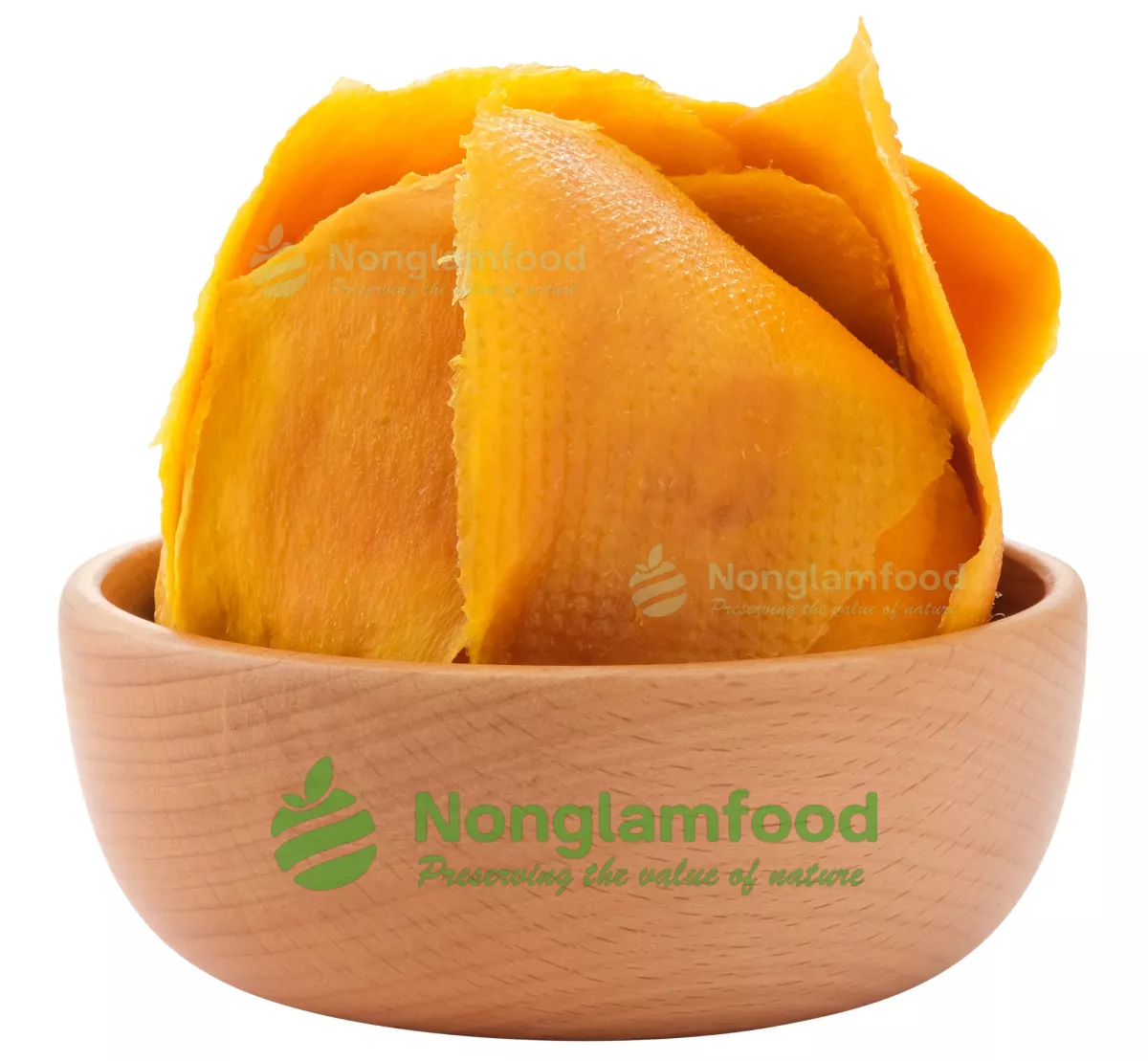
Nonglamfood Soft Dried Mango makes it easy to know what good quality dried mango looks, smells, and tastes like
3. A Practical Spoilage Assessment Checklist
| Assessment Step | What to Check | Discard if... | Safe if... |
|---|---|---|---|
| 1. Smell | Open container; smell immediately | Fermented, sour, alcohol, musty, rancid | Strong concentrated mango aroma even if faint |
| 2. Mould check | Look closely at all surfaces | Any fuzzy growth in any colour | No fuzzy growth visible |
| 3. Colour | Overall colour of pieces | Colour alone is NOT a discard signal | Any colour from golden to dark amber |
| 4. Surface deposits | Check for crystals | Crystals PLUS off-smell together | White powdery crystals without off-smell = just sugar |
| 5. Texture | Gently squeeze a piece | Extreme stickiness PLUS off-smell | Any texture without accompanying off-smell |
| 6. Date | Check best-before label | Date alone is NOT a discard signal | Assess on smell and visual regardless of date |
4. Why Dried Mango Goes Bad: Understanding the Mechanisms
- Moisture reabsorption: The most common cause of post-opening spoilage. Dried mango is hygroscopic it absorbs moisture from ambient air. When water activity rises above 0.6 Aw, microbial growth becomes possible. Airtight storage after opening is non-negotiable.
- Mould from cross-contamination: Wet or food-contaminated hands, or a damp utensil, introduce moisture and microbial load directly into the product. Use a clean dry spoon for every serving.
- Oxidative rancidity: Less common in plain dried mango, but possible in products containing natural oils. Manifests as rancid or oily smell rather than fermented. Prevented by nitrogen-flushed packaging and airtight post-opening storage.
5. Conclusion
Knowing how to tell if dried mango is bad comes down to one primary test: smell. Open the container and trust your nose. Clean tropical mango aroma means the product is safe regardless of colour, surface crystals, or best-before date. Fermented, sour, musty, or absent aroma signals problems worth taking seriously. Visible mould overrides everything discard immediately. With this framework, you will discard far less good dried mango through unnecessary caution while reliably catching the genuine spoilage signs that matter for your health.
Related information
- Is Dried Mango Good for Weight Loss? Dietitian Answers
- Vietnamdriedfruit to OEM private label dried fruit products for Co.opmart, the largest supermarket chain in Vietnam
- Soft Dried Jackfruit Supplier For Import to Russia
- Health Benefits of Pomelo Peel & Dried Pomelo Peel Benefits
- Roasted Nuts | Nuts Should Be a Part of Your Daily Diet
- Is Dried Mango Healthy? Separating Fact from Fiction
PRODUCT CATEGORIES
NEWS

Partner with us to provide and elevate healthier food options while supporting sustainable agriculture with a passion to serve and a commitment to innovation. Together, we can improve the lives of disadvantaged farmers and generate a positive impact!

