




Dedicated Manufacturer and Exporter of Premium Dried Fruits, Natural Fruit Bars, and Flavored & Coated Nuts
Best Organic Dried Mango Without Added Sugar
The search for dried mango without added sugar reveals a more complex market than most consumers expect. Labels use “no added sugar”, “unsweetened”, “natural”, and “organic” in ways that overlap and sometimes mislead. The nutritional differences between products that genuinely use no added sugar and those that use modest amounts are real and worth understanding. This guide cuts through the label language so you can find dried mango that actually delivers on its clean-label promise.
1. Why Added Sugar in Dried Mango Matters
Fresh mango is naturally sweet Vietnamese Cát Chu, Keo Mango and GL3 varieties at peak harvest run 16 - 20 degrees Brix, already high enough to produce a pleasantly sweet dried product. There are two legitimate reasons producers add sugar: controlled sugar infusion improves the texture (osmotic pre-dehydration creates a softer, more pliable product), and sugar contributes to moisture barrier properties that extend shelf life. The less legitimate reason: some producers add significant glucose syrup or sucrose to compensate for flavour loss from aggressive high-temperature drying. The sugar masks the degraded fruit character rather than preserving it.
According to USDA FoodData Central, a 40g serving of no-added-sugar dried mango already contains approximately 27g of natural sugars. Each gram of added sugar on top of this is pure additional sweetness with no nutritional benefit. For consumers managing daily sugar intake, the difference between 27g and 40g per daily serving is meaningful.
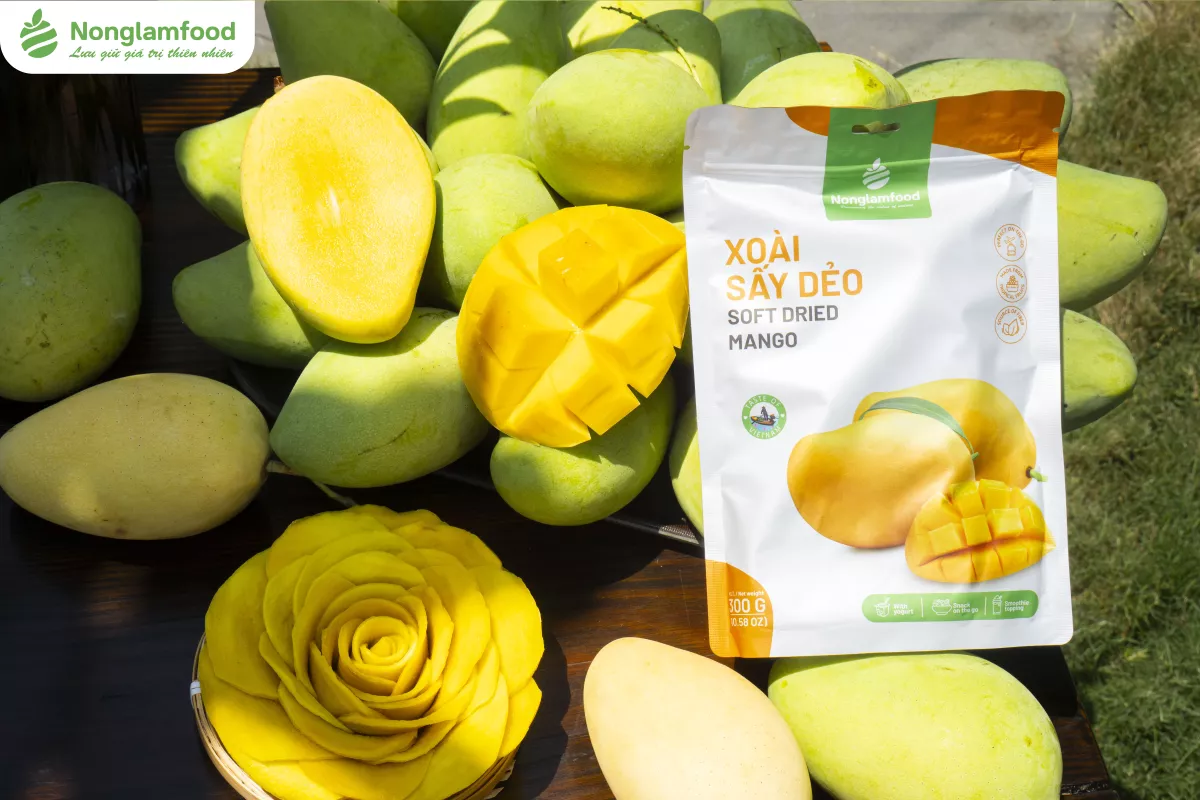
Nonglamfood Soft Dried Mango uses advanced drying technology to preserve the mango's own flavour character
2. How to Read Labels: Decoding No-Added-Sugar Claims
a. What “No Added Sugar” Actually Means
In most regulatory frameworks (EU, USA, Australia), “no added sugar” means no sugar, glucose syrup, fructose, sucrose, honey, maple syrup, or other caloric sweeteners were added during processing. The product may still contain high levels of naturally occurring fruit sugars as dried mango necessarily does. 'No added sugar' does not mean 'low sugar'.
b. What to Check on the Label
| Label Element | What It Shows | What to Look For |
|---|---|---|
| Ingredients list | Every ingredient by weight, descending | Mango as first ingredient; ascorbic acid acceptable; no glucose syrup in second position |
| Total sugars per 100g | Natural + added sugar combined | Expected range for no-added-sugar dried mango: 60–70g per 100g |
| Added sugars (where listed) | Sugar beyond natural fruit content | Should read 0g if genuinely no added sugar |
| Preservatives | SO₂ (sulphites), sorbate | Avoid sulphites if histamine-sensitive |
3. The Organic Question: Does “Organic” Equal No Added Sugar?
No. “Organic” and “no added sugar” are completely independent claims. Organic dried mango means the raw mango was grown without synthetic pesticides or chemical fertilisers, and processing used organic-certified inputs. It says nothing about whether sugar was added during processing. Conversely, a no-added-sugar product may be from conventionally farmed mango with no organic restrictions. Verify both claims separately if both matter to you.
Organic certification adds meaningful cost seed sourcing, farm certification, processing facility audits. Not all quality producers have pursued it. Absence of organic certification does not indicate lower quality in processing, raw material, or nutritional value.
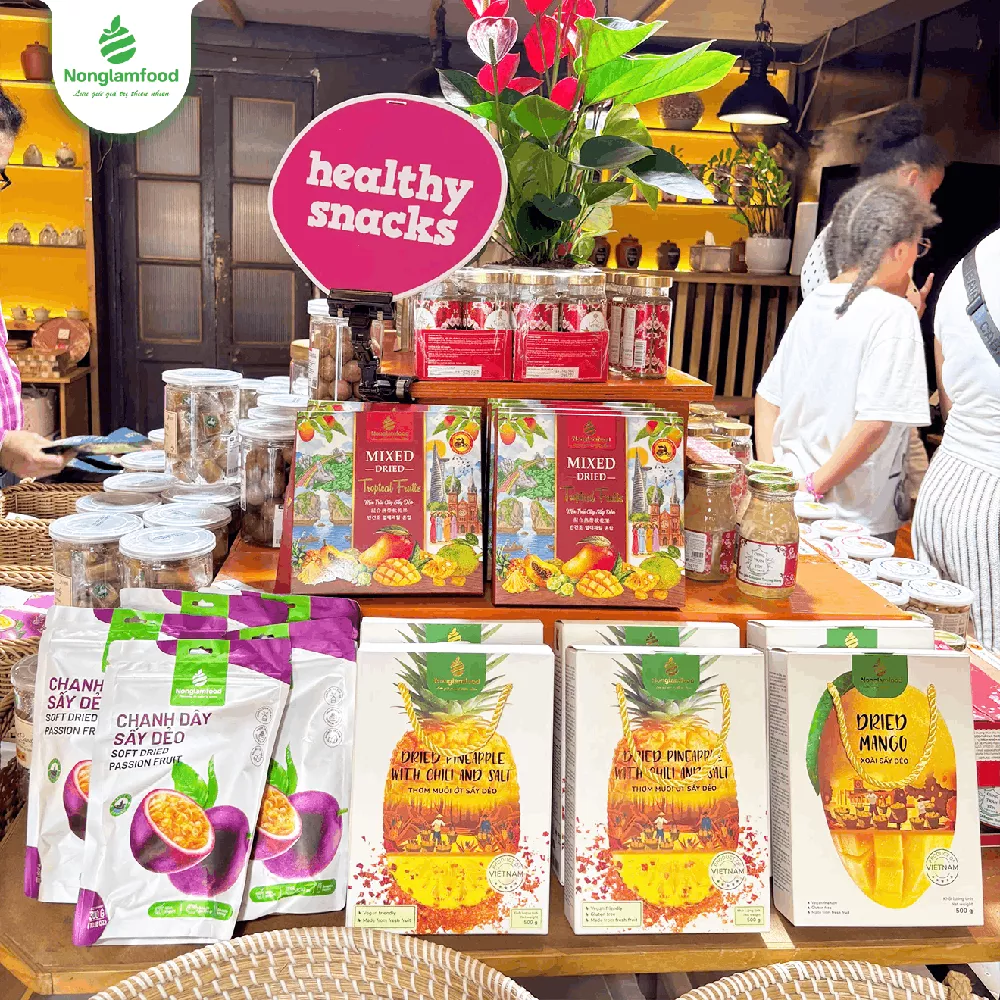
Nonglamfood Soft Dried Mango: crafted from hand-selected Vietnamese mangoes with the natural Brix of the fruit doing the primary sweetness work
4. How Production Method Affects the Need for Added Sugar
At conventional hot-air drying temperatures (65 - 80°C sustained throughout), significant flavour compound degradation occurs volatile aromatic compounds are driven off by heat, and polyphenols contributing to flavour complexity are partially degraded. The result is flat-tasting dried mango that requires more added sugar to compensate.
Nong Lam Food's approach: "We use a limited sugar level to preserve the fruit's natural characteristics as much as possible. Our two-stage heat pump drying with Stage 2 at 25 - 30°C preserves the volatile aromatic compounds and polyphenols that give mango its natural character. Because the fruit's own flavour is preserved through careful low-temperature drying, we need less compensatory sugar addition. The mango's own Brix does the primary sweetness work."
The practical implication: heat pump dried mango with 3 - 5g of added sugar per 100g is nutritionally closer to genuinely no-added-sugar product than conventionally dried mango with 15 - 20g added sugar despite both carrying similar 'natural' marketing language. The production method determines how much compensatory sweetening is needed, which determines the actual nutritional profile.
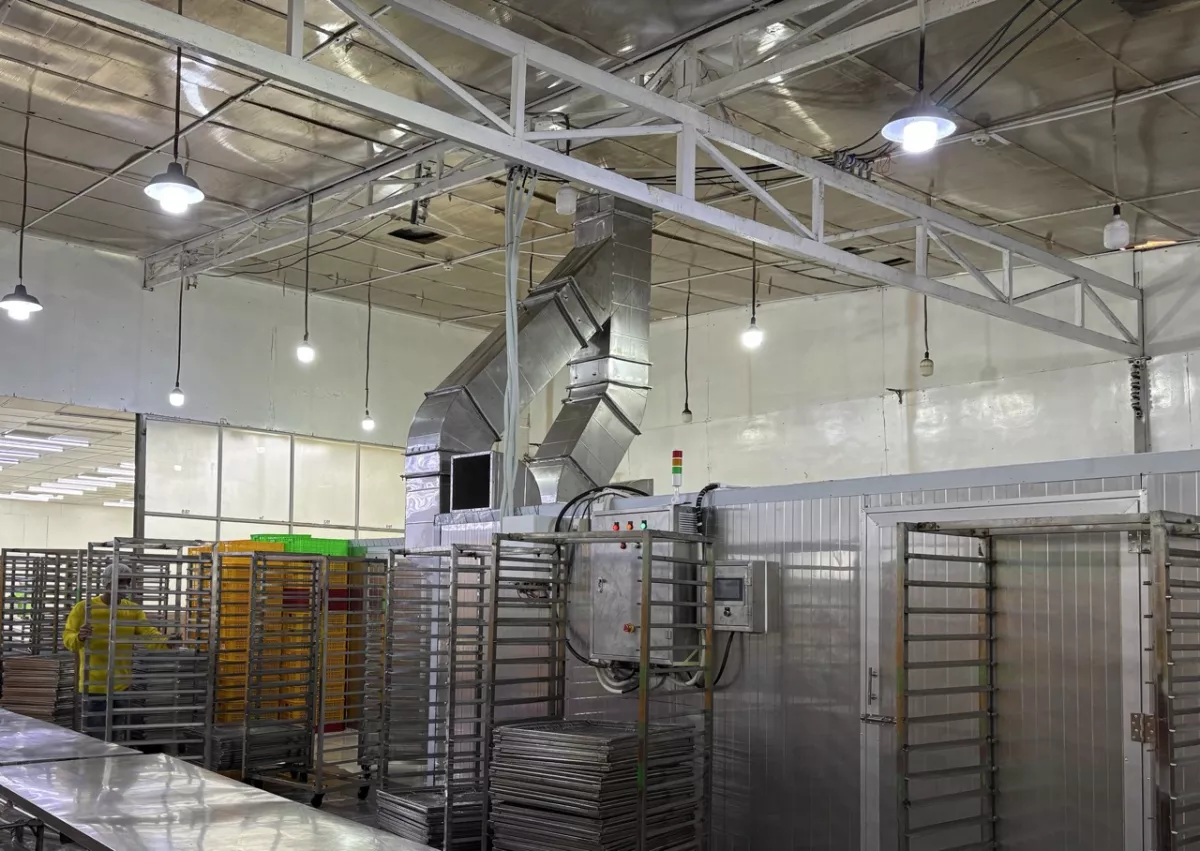
Nonglamfood Soft Dried Mango is a quality-verified product from a transparent producer
5. What Genuinely No-Added-Sugar Dried Mango Looks and Tastes Like
- Chewier and firmer texture: Sugar infusion creates softer, more yielding texture. Without it, the dried mango is denser and requires more chewing which some consumers prefer and others find less pleasant.
- More intensely fruity, slightly tart: The natural sugar-to-acid ratio without additional sweetness masking means flavour is more complex and slightly less uniformly sweet. This is the taste of the actual fruit genuinely pleasant but different from heavily sugared alternatives.
- Darker colour, shorter quality shelf life: Without the moisture-barrier benefit of sugar infusion, truly unsweetened dried mango may darken more quickly. Not a safety issue a cosmetic and quality consideration.
6. Conclusion
Finding genuinely good dried mango without added sugar requires reading beyond front-of-pack marketing and checking the ingredients list and added sugars declaration. The best no-added-sugar dried mango comes from producers using careful low-temperature drying that preserves the mango's natural character making compensatory sugar addition unnecessary rather than simply omitting it and accepting a less pleasant product.
Related information
- Dried Mango Constipation: Is It a Natural Remedy?
- Commercial Dried Mango Process Step by Step
- Nonglamfood at THAIFEX – Anuga Asia 2025
- Is Dried Mango Healthy? Separating Fact from Fiction
- High-quality dried jackfruit manufacturing using low temperature drying
- Fruit and nut bars, a great combination of taste, nutrients, and energy
PRODUCT CATEGORIES
NEWS

Partner with us to provide and elevate healthier food options while supporting sustainable agriculture with a passion to serve and a commitment to innovation. Together, we can improve the lives of disadvantaged farmers and generate a positive impact!

