




Dedicated Manufacturer and Exporter of Premium Dried Fruits, Natural Fruit Bars, and Flavored & Coated Nuts
What Happens When Eating Dried Mango Everyday?
For many people, eating dried mango everyday has become a regular habit and for good reason. It is convenient, naturally sweet, and genuinely nutritious when chosen well. But what does daily consumption actually do to your body over time? The answer depends heavily on how much you eat, which product you choose, and what the rest of your diet looks like. This article breaks it down honestly.
1. What a Daily Serving of Dried Mango Actually Contains
Before evaluating the effects of eating dried mango everyday, it is worth anchoring on what a typical daily serving delivers. A 40g portion approximately 5 - 6 slices is the reference serving used by most nutritional databases and health guidelines.
| Nutrient | Per 40g Daily Serving | What It Contributes |
|---|---|---|
| Calories | ~120 kcal | About 6% of a 2,000-calorie daily diet |
| Natural Sugars | ~27g | Significant nearly equal to the American Heart Association's daily added sugar limit for women (25g) |
| Dietary Fibre | ~1.6g | ~6% of the WHO-recommended 25g daily minimum |
| Vitamin C | ~18mg | ~20% of the adult daily requirement (NIH) |
| Beta-carotene (Vitamin A) | ~40µg RAE | ~4% of daily requirement |
| Potassium | ~130mg | ~3–5% of daily requirement |
Source: USDA FoodData Central; NIH Office of Dietary Supplements; WHO Dietary Fibre Recommendations.

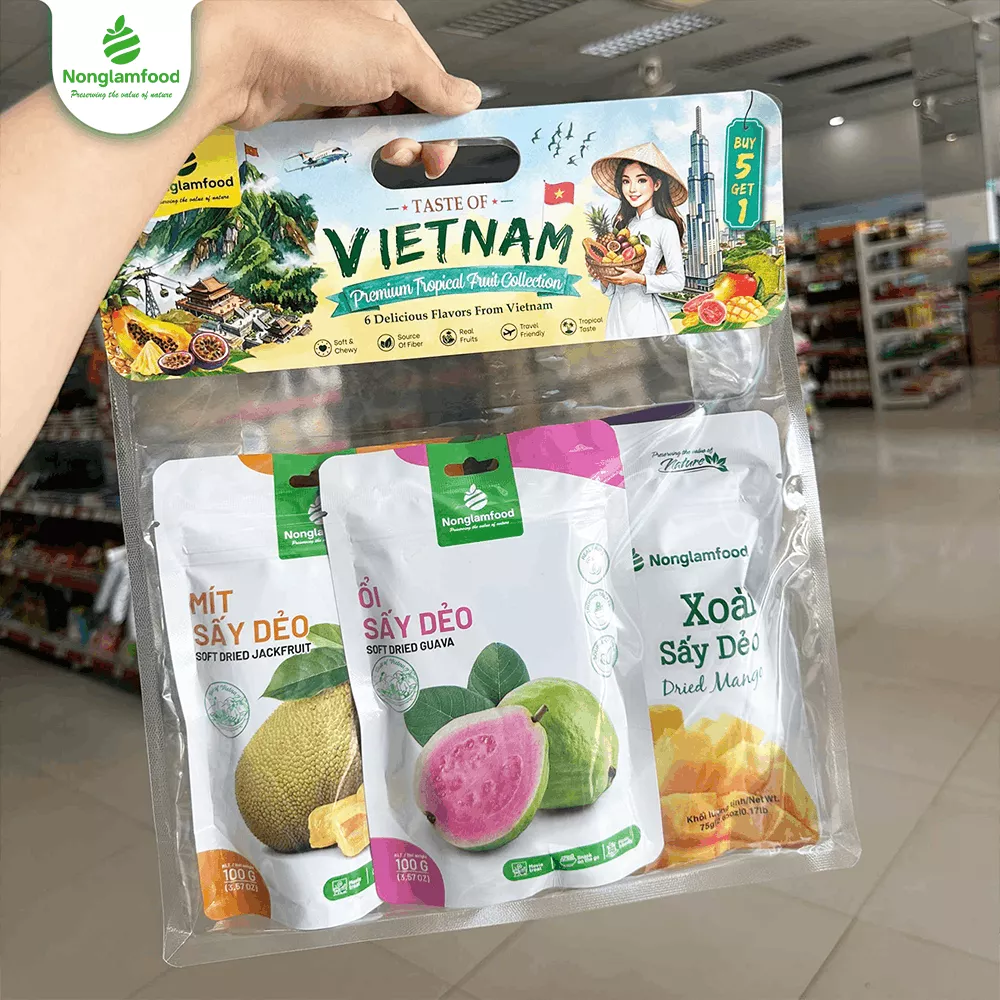
Nonglamfood Soft Dried Mango a convenient, resealable snack designed for effortless daily enjoyment, wherever your day takes you.
2. The Positive Effects of Eating Dried Mango Every Day
a. Consistent Vitamin C and Beta-Carotene Intake
One of the most practical benefits of eating dried mango everyday is the regular contribution of Vitamin C and beta-carotene to your daily micronutrient intake. According to the NIH, Vitamin C is not stored in the body it is water-soluble and excreted when intake exceeds need. This means consistent daily intake from food is genuinely more effective than occasional large doses. A 40g serving contributing approximately 20% of the daily Vitamin C requirement, repeated daily, adds meaningfully to immune function, collagen production, and antioxidant defence over time.
Beta-carotene, which the body converts to Vitamin A as needed, is fat-soluble and can be stored. Daily intake from dried mango contributes to maintaining adequate Vitamin A stores, which support vision, skin health, and immune response.
b. Antioxidant Accumulation From Daily Plant Compound Intake
Research on dietary antioxidants published across multiple reviews in journals including Nutrients and the American Journal of Clinical Nutrition consistently shows that the protective effects of plant polyphenols accumulate with regular, habitual intake rather than from occasional high doses. Eating dried mango everyday contributes mangiferin, quercetin, and beta-carotene to your daily antioxidant portfolio. While no single food is a magic solution, the consistency of daily intake matters more than any single serving size.
c. A Sustainable Snacking Habit With Nutritional Substance
From a dietary pattern perspective, replacing ultra-processed daily snacks biscuits, crisps, commercial confectionery with a portion of no-added-sugar dried mango meaningfully improves the nutritional quality of your snacking. You gain Vitamin C, fibre, and plant antioxidants while reducing artificial additives, refined starch, and trans fats that are common in processed snack alternatives.
3. The Risks of Eating Dried Mango Every Day: What to Watch
a. Sugar Accumulation: The Most Important Daily Consideration
The most significant consideration when eating dried mango everyday is the natural sugar content. A 40g serving contains approximately 27g of natural sugars predominantly fructose and glucose concentrated by the drying process. The American Heart Association recommends limiting added sugar to 25g per day for women and 36g for men. While natural fruit sugars differ metabolically from added sucrose, the concentration effect of drying means that daily servings of dried mango still contribute substantially to overall daily sugar intake.
For most healthy adults eating a balanced diet, a 40g daily serving of no-added-sugar dried mango is unlikely to cause problems. For individuals managing blood sugar levels, insulin sensitivity, or following a low-carbohydrate diet, daily dried mango consumption warrants discussion with a healthcare professional.
b. Caloric Contribution for Weight-Conscious Individuals
At approximately 120 kcal per 40g serving, dried mango is calorie-dense relative to its volume. Daily consumption adds ~840 kcal per week from this single food a meaningful number if total caloric intake is being managed. This does not make daily dried mango consumption inadvisable, but it does make portion discipline important. Pre-measuring a 40g serving rather than eating directly from the packet is the simplest and most effective practical habit.
c. Digestive Sensitivity in Some Individuals
Dried mango contains fructose and sorbitol natural compounds that can cause digestive discomfort (bloating, gas, loose stools) in individuals with fructose malabsorption or irritable bowel syndrome (IBS). According to Monash University's low-FODMAP research, dried mango is classified as high-FODMAP at servings above 25g, due to its fructose and sorbitol content. People with known digestive sensitivities should moderate their daily intake accordingly.
4. How to Make Daily Dried Mango Consumption Work in Your Favour
- Choose no-added-sugar: The single most impactful product choice. No-added-sugar dried mango limits total sugar intake and avoids the glucose syrup or sucrose that many commercial products add on top of the fruit's already concentrated natural sugars.
- Stick to 40g: Pre-portion your daily serving into a small container or reusable bag. Eating directly from the packet makes it easy to consume 2 - 3x the intended portion without noticing.
- Pair with protein or fat: Combining dried mango with a small handful of nuts slows glucose absorption from the fruit sugars, provides satiety-extending protein and fat, and improves absorption of fat-soluble beta-carotene a nutritionally smart daily pairing.
- Time it around activity: The natural carbohydrate energy in dried mango makes it particularly well-suited as a pre-workout snack. Consuming it 30 - 60 minutes before exercise puts the sugar to productive use as fuel rather than adding to a sedentary day's excess.
5. Conclusion: Is Eating Dried Mango Everyday a Good Idea?
For most healthy adults, yes with the right product choice and portion discipline. Eating dried mango everyday provides consistent daily Vitamin C, beta-carotene, dietary fibre, and plant antioxidants in a convenient format. The risks primarily excess sugar and caloric intake are manageable through simple habits: choosing no-added-sugar products, measuring 40g daily, and pairing with protein or healthy fats.
The quality of the dried mango you choose matters as much as the quantity. Products made with heat pump low-temperature drying and limited sugar addition deliver better nutritional value and a more honest daily health contribution than heavily sweetened alternatives produced with conventional high-heat methods.
Nong Lam Food's dried mango produced with heat pump two-stage drying and limited sugar addition is a smart choice for daily snacking. Explore the full range at vietnamdriedfruits.vn.
Related information
- Is Dried Mango Good For Pregnancy?
- Freeze Dried Mango Powder: Uses and Best Substitutes
- Why heat-pump drying technology maintains better nutritional value and taste and flavor of dried fruits?
- 5 Incredible Health benefits of Pineapple
- Mango leather, a similar product like dried mango but more homogenous in texture and taste
- Vietnamdriedfruit to OEM private label dried fruit products for Co.opmart, the largest supermarket chain in Vietnam
PRODUCT CATEGORIES
NEWS

Partner with us to provide and elevate healthier food options while supporting sustainable agriculture with a passion to serve and a commitment to innovation. Together, we can improve the lives of disadvantaged farmers and generate a positive impact!

